
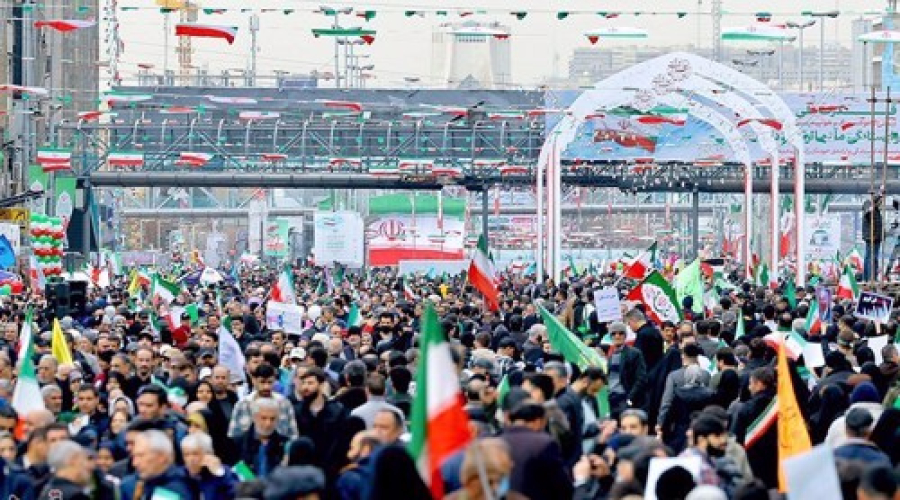
The Iranian Revolution was one of the most significant political events of the 20th century in the Middle East. It culminated in 1357 SH (1979 CE) with the سقوط of the monarchy and the establishment of the Islamic Republic of Iran. The movement was led by Ruhollah Khomeini.
Historical Background
1. Political Dissatisfaction
During the 1340s–1350s SH (1960s–1970s CE), the government of Mohammad Reza Pahlavi implemented modernization programs but faced criticism over political restrictions, limits on party activity, media control, and the role of security institutions.
2. Economic and Social Changes
The sharp rise in oil revenues in the 1350s SH (1970s CE) led to rapid economic growth. However, inflation, widening social inequality, and large-scale rural-to-urban migration created social tensions and public dissatisfaction.
3. Religious and Cultural Factors
A significant segment of the religious community viewed certain cultural and social policies of the government as incompatible with Islamic values. Ayatollah Khomeini’s open opposition began in 1342 SH (1963 CE), which resulted in his exile.
The Course of Events Leading to Victory
The Start of Widespread Protests (1356–1357 SH / 1977–1978 CE)
From late 1356 SH (1977 CE), protests spread across major cities. The traditional practice of holding memorial ceremonies forty days after casualties helped sustain successive waves of demonstrations.
Escalation of the Revolution
In the summer and autumn of 1357 SH (1978 CE), nationwide strikes—especially in the oil industry—placed heavy pressure on the government. Massive demonstrations during the months of Muharram and Safar showed the breadth of the revolutionary movement.
Return of the Revolutionary Leader
On 12 Bahman 1357 SH (1 February 1979 CE), Ayatollah Khomeini returned to Iran after years of exile. The large public استقبال marked a decisive turning point in the revolutionary process.
Final Victory
On 22 Bahman 1357 SH (11 February 1979 CE), the structure of the Pahlavi government collapsed, and the revolution achieved victory.
Outcomes and Consequences
A national referendum in Farvardin 1358 SH (March–April 1979 CE) confirmed the establishment of the Islamic Republic.
A new constitution was drafted and approved.
Iran’s political structure and foreign policy direction changed fundamentally.
Why Is the Islamic Revolution Significant?
It transformed Iran’s political system.
It introduced a model of governance combining religious authority with popular participation.
It had major regional and international impacts.