
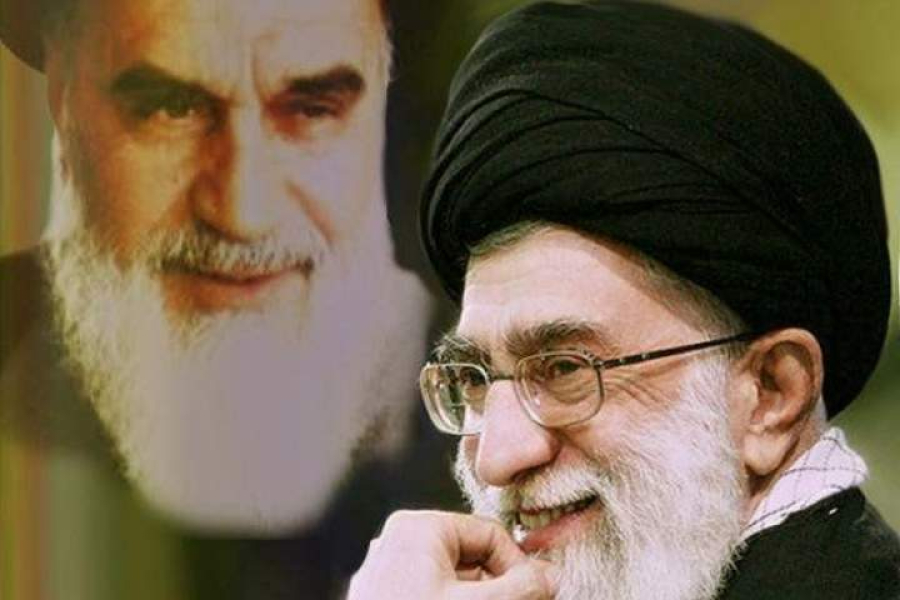
Imam Khomeini, the architect of the Islamic Revolution of Iran, described women as human beings and great educators. In explaining the human dimension of women, he stated:
“The Holy Qur’an is a book that nurtures human beings, and women, too, are nurturers of human beings. If women who nurture human beings are taken away from nations, those nations will be reduced to defeat and decline.”
He also regarded women’s role in the history of Islam as highly significant:
“The history of Islam bears witness to the boundless respect shown by the Messenger of God for this noble child, demonstrating that women have a distinctive and significant role in society which, if not greater than that of men, is no less important.”
Imam Khomeini regarded women as equal to men in their human dignity and, therefore, urged them to make determined efforts in various fields, including education, culture, and politics. He stated:
“You should strive in your studies so that you equip yourselves with moral virtues as well as practical excellence. You should raise strong and capable young people for the future of our country.
In the social sphere, you should participate in all arenas and fields to the extent permitted by Islam. In the political sphere, just as men must participate in political affairs and safeguard their society, women, too, must participate and protect their society.
In the cultural sphere, this culture must be revitalized. Just as men are engaged in scientific and cultural endeavors, you women must also be actively involved.”
### Women in the View of the Supreme Leader of the Islamic Revolution
Over the past four decades, the Supreme Leader of the Islamic Revolution, Ayatollah Khamenei, has repeatedly discussed women’s status, character, and virtues in various meetings, particularly those held with women from different segments of society. The following is one example of his statements:
“There is no difference between women and men in social rights. There is no difference between women and men in personal and individual rights. In a few specific personal matters, certain advantages have been granted to women, while in a few others, certain advantages have been granted to men. These distinctions are based on the natural characteristics of women and men. This is Islam: the most sound, logical, and practical set of laws, principles, and boundaries that can be conceived in matters relating to gender.”
### An Examination of the Status of Women
### 1\. Women’s Education
### The World’s Highest Ratio of Girls to Boys in Primary Education
In 1971 (1350 SH), the ratio of girls enrolled in primary education to boys enrolled at the same level was approximately 35 percent. By 2014 (1393 SH), this figure had reached 50 percent, indicating a balance between girls’ and boys’ access to education and greater educational equity in the country.
### 2\. The Social Sphere
### Activities of Non-Governmental Organizations (NGOs) and Charitable Institutions
Following Mohammad Reza Shah’s decision to control independent women’s activities through the gradual consolidation and centralization of their efforts, virtually no independent political organizations or genuine movements seeking women’s rights remained, apart from underground groups opposing the Shah.
After the Islamic Revolution, women established numerous organizations focusing on cultural and educational activities, entrepreneurship, charitable work, and even research. Today, these include thousands of associations and non-governmental organizations.
Women’s participation in charitable institutions and NGOs is considered one of the most influential forms of their social engagement.
According to statistics from the Vice Presidency for Women and Family Affairs, more than 2,700 NGOs dedicated to women’s affairs were active across Iran’s provinces in 2018 (1397 SH).
### 3\. Women’s Sports
Before the Islamic Revolution, women’s sports had little formal or national standing in the policies and initiatives of the Pahlavi regime.
In the early 1980s, with the establishment of the Women’s Sports Committee, organized sporting activities for women began to develop, and women subsequently achieved numerous accomplishments.
Women’s participation in professional sports before and after the Islamic Revolution is compared in the following table.