
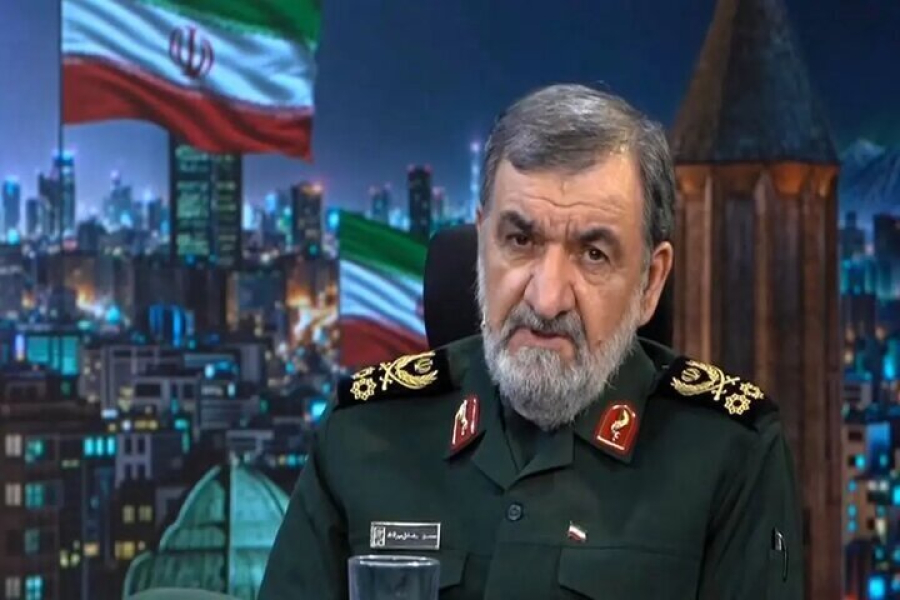
Major General Mohsen Rezaei—representative of the Supreme Leader and Secretary of the Supreme National Security Council—emphasized in an interview, while addressing recent regional developments and the stance of the Islamic Republic of Iran, that everyone must understand that taking action against Iran comes at a cost.
He added: "If diplomacy can foster this realization, we prefer diplomacy; however, should the war continue, Iran possesses the necessary means to sustain its response."
Noting that the country’s full capabilities were not deployed in earlier phases, the Secretary of the Supreme National Security Council stated: "We have introduced greater capabilities into our operations in proportion to the intensity of the conflict, and we remain prepared for the next phase."
Warning of the consequences of the current situation persisting, Rezaei stated: "The continuation of this state of affairs will entail strategic repercussions—for instance, energy markets will not stabilize for the next three years."
Pointing to a shift in regional dynamics in Iran’s favor, he remarked: "The continuation of this war has altered the dynamics of regional relations to Iran’s advantage, as the Persian Gulf states are rapidly redefining their ties with Iran."
The Supreme Leader’s representative added: "They have come to realize that the United States military is incapable of even defending its own bases—this, despite the fact that these very nations had expected the U.S. to defend their own countries."
Regarding U.S. assets in the region, Rezaei warned: "The United States holds valuable assets in the region. In the event of war, cables, data centers, and artificial intelligence facilities could also come within range. Should the conflict reignite, we have a more extensive plan in place." The Secretary of the Supreme National Security Council, addressing the Strait of Hormuz and its management, stated: "First, smuggling exists everywhere in the world; however, the Strait of Hormuz is under Iranian control, and we manage it. Second, over the past two to three months, we have targeted—on average—five vessels belonging to these smugglers every single night. These are the very individuals led by the CENTCOM commander, who also utilizes military forces from the UAE."
Emphasizing the strategic importance of the Strait of Hormuz, he remarked: "Managing the Strait is a national asset for us; it is not merely a matter of collecting tolls. The core issue is security. While fees could be charged to cover costs related to security, insurance, and environmental protection, the significance of managing the Strait extends far beyond the revenue it generates."
Regarding Iran’s stance on diplomacy and negotiations, Rezaei stated: "We will not return to the diplomacy of the past, yet we are not abandoning diplomacy altogether. We have presented seven new conditions through intermediaries; until these conditions are met, Iran will neither reopen the Strait nor return to negotiations."
Elaborating on the mechanism of the new agreement, he explained: "The difference this time is that we are embedding guarantees directly into the structure of the agreement itself. The sequence is: first, the fulfillment of obligations; second, Iran’s decision to reopen the Strait; and third, the resumption of shipping based on new arrangements agreed upon with Oman."
The Secretary of the Supreme National Security Council stressed: "We are no longer interested in an agreement where the only guarantee offered is 'political good faith'."
In conclusion, Rezaei noted: "If Washington fulfills its commitments, a path will open for the reopening of the Strait of Hormuz and the continuation of diplomacy." However, Iran will not—at least initially—discard the leverage that brought the other side to the negotiating table, only to then wait and see whether the promises are fulfilled.