
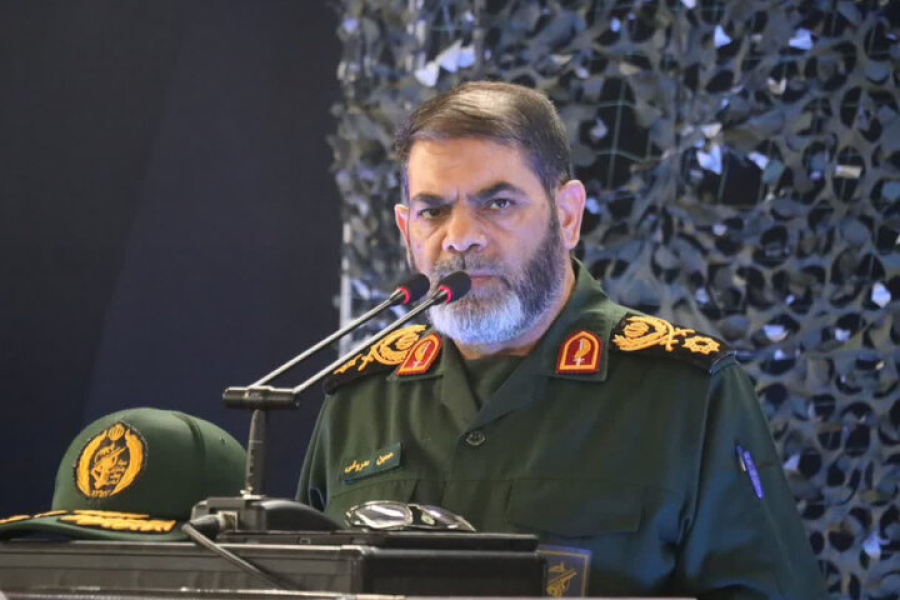
According to a Mehr News Agency reporter, Brigadier General Hossein Maroufi, speaking at the second national assembly honoring the 4,000 martyrs of Golestan Province, stated: "Holding assemblies and commemorations for martyrs is not merely about organizing a single event; rather, it serves as an opportunity to promote the discourse of resistance, *jihad* (struggle), and martyrdom, and to convey the message of the martyrs to future generations."
Noting that the Iranian nation has demonstrated its commitment to the ideals of the Islamic Revolution—both over the past years and, in particular, in recent months—he added: "The martyrs taught us that standing firm against the enemy brings honor and dignity, whereas retreating before the enemy paves the way for domination and humiliation."
The Deputy for Cultural Affairs of the Islamic Revolutionary Guard Corps (IRGC) continued: "By following the example of the martyrs, the Iranian nation has chosen the path of resistance and steadfastness; the honor and dignity the country enjoys today are rooted in this path and the sacrifices made by the martyrs."
Referring to the role of martyrs in Iran's contemporary history, Brigadier General Maroufi stated: "The pure blood of the 188,000 martyrs of the Sacred Defense era—including the 4,000 martyrs from Golestan Province—has not been shed in vain. The impact and results of their self-sacrifice can be seen in the strength and resilience of the Iranian nation."
Emphasizing the necessity of continuing the path of the martyrs, he remarked: "Commemorations for the martyrs must transcend being mere one-off events; they should evolve into a living, continuous movement dedicated to promoting the culture of self-sacrifice and martyrdom."
The IRGC’s Deputy for Cultural Affairs identified the prevention of the forgetting or distortion of events from the Sacred Defense era as one of the most critical functions of these congresses. He added: "These congresses must facilitate the revisiting of the enduring scenes from the Sacred Defense and ensure that the truth regarding the epic feats of the Iranian nation is passed on to future generations." Continuing his remarks, Maroufi posed the question of how a war—fraught with suffering, destruction, and casualties—came to be known as the "Sacred Defense." He stated that this question points us toward the decisive role of Imam Khomeini in defining the concept of "defense" and transforming the resistance of the Iranian nation into a sacred endeavor.
He noted that explaining why the Iranian nation’s defense became "sacred"—along with re-examining the role of leadership, the people's faith, and their self-sacrifice during the war—are topics that should be addressed within cultural programs dedicated to the martyrs.