
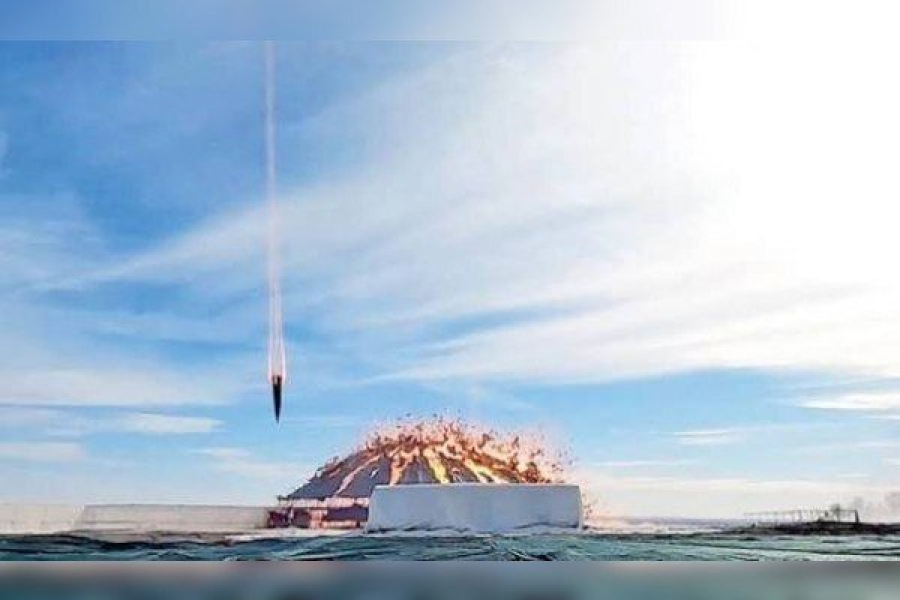
Zeynab Yousefvand, Regional Expert: One scenario discussed in recent months regarding a potential war between Iran and the United States involves an attack on underground facilities—such as those located within the "Kuh-e Kolang" (Kolang Mountain) complex—aimed at destroying Iran’s nuclear or missile infrastructure. Proponents of this scenario argue that, given the difficulty of destroying such facilities with conventional weaponry, the U.S. might resort to using tactical nuclear weapons. This analysis rests on a fundamental premise: if an underground facility cannot be destroyed by conventional means, then the use of nuclear weapons becomes the only remaining option. However, such a conclusion is not militarily defensible.
In operations targeting underground facilities, the issue is not merely explosive yield; rather, what matters is the expected level of damage, the nature of the target, the operational outcome of the strike, and its impact on the adversary's military capabilities. Even the use of a weapon with immense destructive power does not guarantee that all intended objectives will be achieved. In this piece, we will examine why the difficulty of destroying Iran’s underground facilities does not, in itself, constitute sufficient grounds to suggest an increased likelihood of the U.S. employing tactical nuclear weapons.
1. The Difficulty of Destruction Is Not the Same as Impossibility
The primary argument presented regarding the potential for a nuclear strike against Iran’s underground facilities centers on the resilience of these sites against conventional weaponry. Constructing military structures deep underground and utilizing rock cover can reduce their vulnerability to certain types of attacks. However, the level of protection depends on the specific characteristics of each facility; therefore, not all underground complexes can be assumed to possess the same degree of resistance.
It is important to note that the difficulty of destroying a target does not necessarily dictate the use of the most powerful weapon available. In military assessment, a distinction must be made between the complete destruction of a structure, damage to equipment, a reduction in operational capacity, and the disruption of a facility's overall function.
An operation might fail to completely destroy a facility's primary structure while still managing to diminish a portion of its operational capacity. Conversely, inflicting heavy damage on a structure does not necessarily equate to the total destruction of all the equipment and capabilities housed within it. Consequently, to evaluate the success of an attack, one must first define the specific military objective. The criteria for assessment will differ depending on whether the goal is to halt a facility's operations entirely or merely to reduce its capacity. Therefore, the claim that the United States would be compelled to resort to nuclear weapons should conventional arms fail is a hasty conclusion—one reached without examining the actual operational objectives or the full range of available options.
2. Nuclear Weapons Do Not Guarantee Total Destruction
Another flaw in analyses that view the use of nuclear weapons as a definitive solution for destroying underground facilities is the failure to account for the physical limitations of such weapons. While the explosive power of a nuclear weapon is immense, the extent of damage inflicted upon an underground target depends on a variety of factors. Geological characteristics, the depth of the target, the structural design, and the specific conditions of the detonation can all influence the outcome of an attack. Without reliable data on these variables, one cannot conclude that a nuclear strike will necessarily destroy every component of a facility.
Furthermore, employing nuclear weapons against a specific target entails consequences that extend well beyond that target itself. The blast, thermal effects, and the potential release of radioactive materials can impact an area far broader than the facility’s immediate footprint. While the scale of these effects depends on the type of detonation and environmental conditions, they must inevitably be factored into any military assessment.
Consequently, the use of nuclear weapons should be evaluated based on the actual expected outcome, rather than merely on their nominal destructive power. If the objective is to neutralize a specific facility, increasing the destructive yield does not necessarily translate into a proportional increase in the likelihood of achieving the ultimate goal.
3. Destroying a Facility Is Not the Same as Eliminating a Military Capability
A critical issue in military analyses concerning attacks on Iran’s underground facilities is the distinction between destroying a physical target and eliminating the military capability associated with it. If the United States’ objective is to curb Iran’s missile capabilities, the destruction of a single facility will not necessarily achieve that goal. Missile capability depends on a complex set of factors and cannot be reduced to a single building or geographic location.
The same holds true for nuclear infrastructure. Destroying a facility is not synonymous with eliminating the technical know-how, specialized personnel, and the full range of capacities associated with a program. Even if an attack inflicts severe damage on physical infrastructure, the long-term outcome will depend on other factors as well.
For this reason, when assessing the success of an operation, one must distinguish between physical damage and strategic outcome. An attack might succeed in destroying a structure, yet fail to achieve the primary objective of the conflict. From this perspective, employing nuclear weapons to destroy an underground facility—even if physically successful—does not guarantee the complete elimination of the specific military capability targeted by the United States.
The more critical issue is the operational outcome of an attack.
In warfare, the value of a weapon is not determined solely by its destructive power. More important than destructive capacity is the outcome that its employment yields on the battlefield.
If the United States’ objective is to diminish Iran’s missile capabilities, a distinction must be made between inflicting damage on a specific facility and achieving a sustained reduction in Iran’s offensive capacity. While these two objectives may be related, they are not necessarily identical. An attack might damage a facility without eliminating all the associated capabilities. Furthermore, the destruction of a single target may not, in itself, bring about a decisive shift in the course of the war.
Under such circumstances, the use of a weapon with such far-reaching consequences is militarily justifiable only if the expected gains significantly outweigh those of alternative options. This is precisely where the argument for the necessity of using nuclear weapons falters. The mere difficulty of striking a facility does not provide sufficient insight into how such an action would influence the overall outcome of the war. Without such an assessment, one cannot reasonably argue that the use of nuclear weapons is necessary.
5. The Risk of Escalation and Loss of Operational Control
In initial calculations, the use of a tactical nuclear weapon might be envisioned as a limited strike against a specific target. However, the adversary’s response could push the scope of the conflict well beyond its original parameters. In such a scenario, a nuclear strike might not only affect the target’s military capacity but also alter the adversary’s deterrence calculus and decision-making process. The targeted party might interpret the use of a nuclear weapon as an indication of an increased risk of subsequent attacks; consequently, to prevent a recurrence, they might choose to continue or even escalate the conflict. This situation holds particular significance for the United States, as the objective of a military operation is typically to achieve a political outcome at a manageable cost. If an attack leads to the expansion of the conflict and an escalation in military costs, the final outcome may diverge from the initial objective.
Furthermore, crossing the nuclear threshold can intensify the pressure to uphold the credibility of military threats. Should the adversary respond, Washington might face political pressure to sustain the operation—driven by the need to prevent the erosion of its own deterrence. Consequently, an attack intended to resolve a specific issue could trigger a chain of actions and reactions with an unpredictable conclusion. This is not to suggest that every nuclear strike will inevitably escalate into a broader war; rather, the point is that the potential for such an outcome constitutes part of the military costs of an attack and cannot be excluded from the initial strategic calculus.
6. Conventional Options Remain Relevant
The notion that the United States has only two choices—the complete destruction of underground facilities or the use of nuclear weapons—oversimplifies the nature of military operations.
In the general assessment of military operations, there are distinctions between various objectives, the likelihood of success, and the costs associated with each option. While the goal of an operation might be the total destruction of a structure, the objective could also be more limited—such as reducing operational capacity or preventing the execution of a specific military mission. Furthermore, the failure of an attack to achieve a complete outcome does not necessarily mean that conventional options have been exhausted. Military command may evaluate the results of an operation and decide whether to continue, halt, or adjust the objectives.
Of course, the existence of conventional options does not guarantee their success. Some underground facilities may possess such high levels of protection that their complete destruction is difficult or uncertain. However, it does not follow that the use of nuclear weapons is the logical next step or the best alternative.
In reality, military decision-making hinges on weighing the potential gains against the costs of each option. Even if a conventional attack fails to achieve the full objective, it may still hold military value—particularly if the outcome aligns with more limited operational goals. Therefore, to justify the use of nuclear weapons, one must demonstrate that other options are not only challenged in achieving the total destruction of the target but are also incapable of fulfilling the intended military objectives. The mere difficulty of attacking a facility is insufficient to substantiate such a claim. Conclusion
The scenario of employing tactical nuclear weapons against Iran’s underground facilities is technically conceivable; however, the difficulty of destroying these facilities does not, in itself, establish a high probability that such an action would be taken. First, greater destructive power does not guarantee the complete annihilation of an underground complex. Second, the physical destruction of a facility is distinct from the elimination of the military capability associated with it. Third, the physical success of an attack does not necessarily equate to the achievement of a war’s strategic objectives. Finally, the use of nuclear weapons carries the risk of escalating the conflict and increasing operational costs.
Ultimately, a distinction must be drawn between the United States' technical capacity to employ nuclear weapons and the military necessity for such an action. While the U.S. may face limitations in striking underground targets, these constraints do not, by themselves, render the use of nuclear weapons inevitable. In the absence of credible evidence regarding the military necessity of such a move, it is more logical to view a tactical nuclear strike as a high-cost, low-probability scenario—rather than an inevitable consequence of the challenges involved in destroying Iran’s underground facilities.