
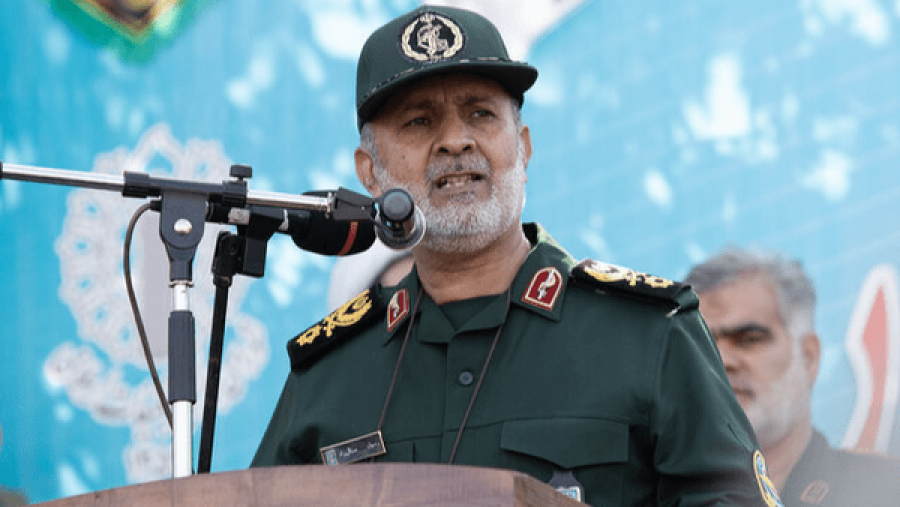
The deputy political officer of the Political-Ideological Office of the Supreme Commander of the Armed Forces said: The Islamic Revolutionary Guard Corps Navy, with its timely response, failed the US’s attempt to create a new route in the Strait of Hormuz in several stages and did not allow the Americans to achieve their goals.
Fars News Agency Political Group: Recent developments in the Strait of Hormuz and the southern regions of the country have once again turned this strategic waterway into the center of security and geopolitical competition in the region. Simultaneously with the increase in US movements and some claims about the attempt to change the status of maritime traffic in the Strait of Hormuz, numerous questions have been raised about Washington’s goals, the consequences of these actions, and the future of the security equations in the region.
In this context, Fars correspondent sat down with General Rasoul Sanaei Rad, deputy political officer of the Political-Ideological Office of the Supreme Commander of the Armed Forces.
In this interview, he explained the US goals for the recent developments, as well as the strategic dimensions of the Strait of Hormuz issue, Washington's failures after the 40-day war, and the consequences of continuing this trend.
You can read the details of this interview below.
Washington seeks to compensate for the failures of the 40-day war
Fars: Given the recent developments, what is your assessment of the US actions in the Strait of Hormuz? Should these actions be considered temporary events or part of a grand strategy?
Sardar Sanaei Rad: What happened today in the Strait of Hormuz and the southern regions of the country should be analyzed within the framework of the Americans' malicious policy. They are seeking to compensate for what they did not gain in the 40-day war and even what they lost in this war.
The fact is that the issue of the Strait of Hormuz was one of the issues for which the Americans did not have a precise forecast during the 40-day war. In fact, that war itself created new conditions in the Strait of Hormuz that imposed extremely heavy costs on the United States.
The first consequence of this situation was the increase in energy prices; an issue that also affected the United States itself. The increase in gasoline prices within the United States brought serious criticism to Donald Trump, because in his economic promises he had promised to reduce prices and improve living conditions.
The costs of the 40-day war dragged the United States to the Strait of Hormuz
On the other hand, the increase in energy prices also worried the European allies of the United States. The closure of the Strait of Hormuz put additional pressure on Washington's regional allies, and the combination of these factors imposed heavy costs on the Americans themselves and made the situation more complicated for them.
Subsequently, the United States followed several paths simultaneously to remove this lever from the control of the Islamic Republic of Iran. First, it designed and implemented several military operations, none of which were successful. Then he raised the issue of a ceasefire and negotiations, but in the same circumstances where the ceasefire had been established, the Americans themselves tried several times to pave the way for the opening of the Strait of Hormuz by violating the ceasefire and carrying out deceptive operations.
The Strait of Hormuz has become a strategic knot for the United States
One of the biggest failures of the United States in this case was the attempt to gain NATO support. Washington asked its allies for help in opening the Strait of Hormuz, but was met with indifference. This led Trump to openly complain about his European allies at the last NATO summit and even order the severance of economic relations with Spain.
The series of these developments shows that the Strait of Hormuz has become a strategic knot for the United States. They believe that if they can take this lever away from the Islamic Republic of Iran, they will be able to push forward future negotiations under pressure and gain concessions on issues such as the nuclear issue.
Washington's Efforts to Create a New Route in the Strait of Hormuz
Fars: In recent days, the United States has pursued a new scenario in the Strait of Hormuz. What are the dimensions of this scenario and how has the Islamic Republic of Iran faced it?
Sardar Sanaei-Rad: After the US failed in the military option and also failed to take advantage of the ceasefire and political pressure, Washington put a series of limited and managed operations on the agenda. These operations were implemented in several stages and their main goal was to change the existing equations in the Strait of Hormuz.
Since the eve of Trump's visit to China, the Americans have been seeking to implement this scenario and have repeated it in several stages. In recent days, they have also tried to create a different route from the one that the Islamic Republic of Iran had determined based on the memorandum of understanding.
Based on this understanding, a safe route for vessels to pass was to be created within a specific period of time, and then, by collecting mines, the groundwork for the complete reopening of the Strait of Hormuz was prepared. This process was being pursued in cooperation with Oman, and the Islamic Republic of Iran had also accepted a logical mechanism for managing maritime traffic.
How did the IRGC Navy disrupt the US equations?
But the Americans disrupted this process. They created a separate route south of the Strait of Hormuz and at the same time tried to deceive some countries and put pressure on some other Arab countries in the region to move oil tankers in a chain along that route.
Their goal was to have a large number of oil tankers pass through this route simultaneously to deny the Islamic Republic of Iran’s defense forces any possibility of reaction and, in effect, impose a new route on the Islamic Republic of Iran.
But this scenario also did not come to fruition. The IRGC Navy, with its timely response, thwarted this attempt in several stages and did not allow the Americans to achieve their goals.
I believe that Trump's harsh and hysterical reactions that occurred at the same time as the funeral of the "Martyred Imam" and his fellow martyrs were the result of these failures. The insults he made to the Iranian nation were not simply out of anger, but pursued multiple goals.
The reality on the ground of the US operations contradicts their plan.
One of these goals was to overshadow the magnificent funeral ceremony and distract public opinion and the media from the news of the US defeat in the Strait of Hormuz.
The Americans had also spent a lot of money in Iraq and thought they had control of that country's atmosphere, but the large presence of the people, and especially the slogans of revenge and bloodlust for the "Martyred Imam" and the martyrs of the two wars, made Trump even more angry.
For this reason, the US has continued to carry out a series of operations, but it is noteworthy that these actions are always accompanied by a media attachment.
Immediately after each operation, they announce that they have carried out punitive attacks against Iranian offensive and defensive centers and claim that they have targeted the radar and military centers of the Islamic Republic of Iran, but the reality on the ground shows something else.
In practice, we see that the targets hit were water pumping stations, mineral water production units, environmental protection posts and even some other civilian centers. Also, in continuation of these actions, they attacked a barracks in Iranshahr, as a result of which a number of our country's soldiers were injured and a number were martyred.
These facts show that the US claims about targeting military centers are far from what happened on the field and, more than anything, they express their desperation. Despite having extensive equipment and facilities, the Americans have been stopped in the Strait of Hormuz against the fighters of the Islamic Republic of Iran and have not been able to achieve their goals.
Iran will not retreat from its strategic achievement in the Strait of Hormuz
Fars: Given the course of developments, how do you assess the future of this confrontation? What consequences will the continuation of these actions have for the region, the global economy, and America’s calculations, and what approach will the Islamic Republic of Iran take?
Sardar Sanaei-Rad: What has happened during this period shows that the Islamic Republic of Iran will not retreat from its strategic achievement in the Strait of Hormuz. The insistence and insistence of the Americans to change the current situation itself indicates the importance of this issue.
If the Strait of Hormuz did not have such a strategic position for Washington, this country would not be willing to repeat fruitless operations many times, despite all the political, military, and media costs.
The repetition of these attacks and unsuccessful actions also shows that the Americans have not been able to achieve their goals so far. Therefore, the Islamic Republic of Iran will not retreat from its positions; Because the experience of these developments showed that controlling and managing this strategic waterway is an important achievement for the country.
Of course, continuing this dangerous and adventurous game will not only cost the Islamic Republic of Iran money, but will also increase the scope of tension in the region and endanger the security of international trade. The first victims of this situation will be the regional allies of the United States and the Arab countries.
General Sanaei Rad: US plan in the Strait of Hormuz failed due to the IRGC’s action
The deputy political officer of the Political-Ideological Office of the Supreme Commander of the Armed Forces said: The Islamic Revolutionary Guard Corps Navy, with its timely response, failed the US’s attempt to create a new route in the Strait of Hormuz in several stages and did not allow the Americans to achieve their goals.
Fars News Agency Political Group: Recent developments in the Strait of Hormuz and the southern regions of the country have once again turned this strategic waterway into the center of security and geopolitical competition in the region. Simultaneously with the increase in US movements and some claims about the attempt to change the status of maritime traffic in the Strait of Hormuz, numerous questions have been raised about Washington’s goals, the consequences of these actions, and the future of the security equations in the region.
In this context, Fars correspondent sat down with General Rasoul Sanaei Rad, deputy political officer of the Political-Ideological Office of the Supreme Commander of the Armed Forces.
In this interview, he explained the US goals for the recent developments, as well as the strategic dimensions of the Strait of Hormuz issue, Washington's failures after the 40-day war, and the consequences of continuing this trend.
You can read the details of this interview below.
Washington seeks to compensate for the failures of the 40-day war
Fars: Given the recent developments, what is your assessment of the US actions in the Strait of Hormuz? Should these actions be considered temporary events or part of a grand strategy?
Sardar Sanaei Rad: What happened today in the Strait of Hormuz and the southern regions of the country should be analyzed within the framework of the Americans' malicious policy. They are seeking to compensate for what they did not gain in the 40-day war and even what they lost in this war.
The fact is that the issue of the Strait of Hormuz was one of the issues for which the Americans did not have a precise forecast during the 40-day war. In fact, that war itself created new conditions in the Strait of Hormuz that imposed extremely heavy costs on the United States.
The first consequence of this situation was the increase in energy prices; an issue that also affected the United States itself. The increase in gasoline prices within the United States brought serious criticism to Donald Trump, because in his economic promises he had promised to reduce prices and improve living conditions.
The costs of the 40-day war dragged the United States to the Strait of Hormuz
On the other hand, the increase in energy prices also worried the European allies of the United States. The closure of the Strait of Hormuz put additional pressure on Washington's regional allies, and the combination of these factors imposed heavy costs on the Americans themselves and made the situation more complicated for them.
Subsequently, the United States followed several paths simultaneously to remove this lever from the control of the Islamic Republic of Iran. First, it designed and implemented several military operations, none of which were successful. Then he raised the issue of a ceasefire and negotiations, but in the same conditions that the ceasefire had been established, the Americans themselves tried several times to pave the way for the opening of the Strait of Hormuz by violating the ceasefire and carrying out deceptive operations.
The issue of the Strait of Hormuz has become a strategic node for the United States
One of the greatest failures of the United States in this case was the attempt to attract NATO support. Washington asked its allies for help in opening the Strait of Hormuz, but was met with their indifference. This issue caused Trump to openly complain about his European allies at the last NATO summit and even issue an order to sever economic relations with Spain.
These developments show that the issue of the Strait of Hormuz has become a strategic node for the United States. They believe that if they can take this lever away from the Islamic Republic of Iran, they will be able to push forward future negotiations under pressure and gain concessions on issues such as the nuclear issue.
Washington's Efforts to Create a New Route in the Strait of Hormuz
Fars: In recent days, the United States has pursued a new scenario in the Strait of Hormuz. What are the dimensions of this scenario and how has the Islamic Republic of Iran faced it?
Sardar Sanaei-Rad: After the US failed in the military option and also failed to take advantage of the ceasefire and political pressure, Washington put a series of limited and managed operations on the agenda. These operations were implemented in several stages and their main goal was to change the existing equations in the Strait of Hormuz.
Since the eve of Trump's visit to China, the Americans have been seeking to implement this scenario and have repeated it in several stages. In recent days, they have also tried to create a different route from the one that the Islamic Republic of Iran had determined based on the memorandum of understanding.
Based on this understanding, a safe route for vessels to pass was to be created within a specific period of time, and then, by collecting mines, the groundwork for the complete reopening of the Strait of Hormuz was prepared. This process was being pursued in cooperation with Oman, and the Islamic Republic of Iran had also accepted a logical mechanism for managing maritime traffic.
How did the IRGC Navy disrupt the US equations?
But the Americans disrupted this process. They created a separate route south of the Strait of Hormuz and at the same time tried to deceive some countries and put pressure on some other Arab countries in the region to move oil tankers in a chain along that route.
Their goal was to have a large number of oil tankers pass through this route simultaneously to deny the Islamic Republic of Iran’s defense forces any possibility of reaction and, in effect, impose a new route on the Islamic Republic of Iran.
But this scenario also did not come to fruition. The IRGC Navy, with its timely response, thwarted this attempt in several stages and did not allow the Americans to achieve their goals.