
Introduction
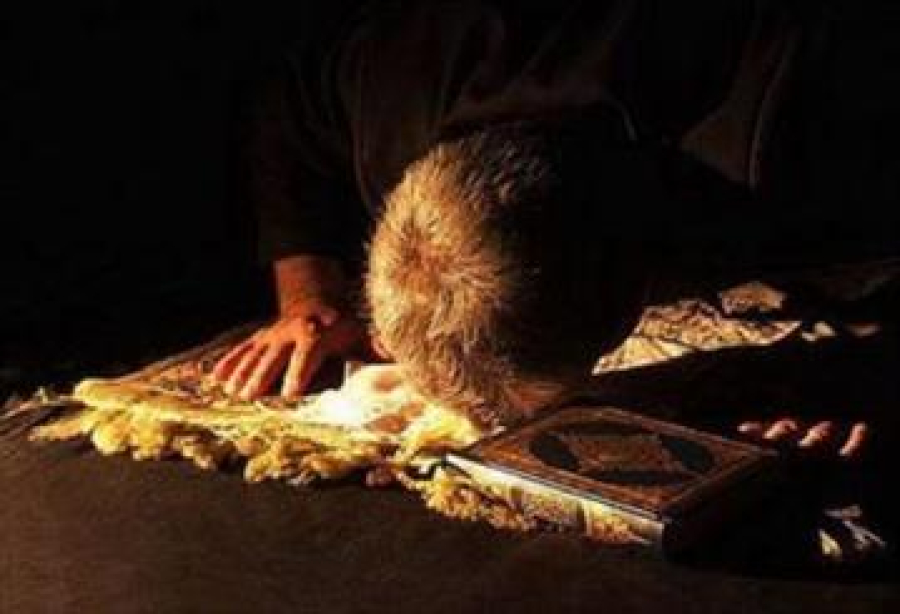
Prostration (sujood) is a fundamental component of Islamic prayer. In Twelver Shi’a jurisprudence, the validity of prostration depends not only on the movements performed by the worshipper but also, under ordinary circumstances, on the material on which the forehead rests.
The relevant rules are drawn from narrations attributed to the Prophet Muhammad and the Imams of the Ahl al-Bayt, and they are explained in the works of Shi’a jurists.
1. The General Rule Concerning the Surface of Prostration
According to the standard ruling in Twelver Shi’a jurisprudence, the forehead should rest on the earth or on materials that grow from the earth, provided they are not ordinarily eaten or worn.
A narration attributed to Imam Ja‘far al-Sadiq states:
«“Prostration is not permissible except on the earth or on what grows from the earth, except that which is eaten or worn.”»
Arabic: السُّجُودُ لَا يَجُوزُ إِلَّا عَلَى الْأَرْضِ أَوْ عَلَى مَا أَنْبَتَتِ الْأَرْضُ إِلَّا مَا أُكِلَ أَوْ لُبِسَ
Reference: Shaykh al-Saduq, ‘Ilal al-Shara’i; related reports appear in Tahdhib al-Ahkam and Wasa’il al-Shi’a.
This narration is commonly cited to explain why earth and certain natural materials are accepted for prostration, while ordinary clothing and carpets generally are not.
2. Examples of Materials Used for Prostration
Under the standard Twelver Shi’a rules, suitable materials generally include:
- Earth and soil.
- Clay and stone.
- Certain plant materials, such as leaves, when they meet the relevant conditions.
- Other qualifying natural materials that are neither normally eaten nor worn.
Materials such as ordinary carpets, clothing, and many textile coverings generally do not qualify as the surface for the forehead.
The exact ruling depends on the material and the jurisprudential opinion being followed. Consequently, this list should be understood as a general explanation rather than an exhaustive legal ruling for every circumstance.
3. Is a Prayer Seal Required?
A clay tablet is not independently obligatory. Its purpose is to provide a suitable surface for prostration.
If a worshipper has access to another surface that meets the requirements, the use of a separate tablet is not necessary under the general rule. The key issue is the suitability of the material, not the shape or name of the object.
4. What Happens in Cases of Necessity?
Islamic jurisprudence recognizes that circumstances can affect the application of ordinary rules. Illness, injury, the inability to reach a suitable surface, or other exceptional conditions may require different arrangements.
The details of such cases depend on the circumstances and the ruling of the relevant religious authority. It is therefore inappropriate to assume that the ordinary rule applies identically in every situation.
5. Distinguishing Religious Sources from Jurisprudential Conclusions
The Qur’an establishes the importance of prostration as an act of worship. Hadith provide more specific guidance concerning the material used for the forehead, while jurists interpret these reports and determine how they apply to practical situations.
This distinction is important: the Qur’an does not explicitly command the use of a mohr, while the detailed conditions for the surface of prostration are associated with hadith and jurisprudential interpretation.
Conclusion
In Twelver Shi’a jurisprudence, the forehead must ordinarily rest on the earth or on qualifying natural materials during prostration. A clay tablet is a convenient means of following this rule, especially when praying on carpets or textile coverings.
The tablet is not worshipped and is not obligatory as a particular object. The essential considerations are the worshipper’s devotion to God and compliance with the relevant rules governing the surface of prostration.
Primary sources: The Holy Qur’an, including Surah al-Hajj (22:77) and Surah al-‘Alaq (96:19); Shaykh al-Saduq, ‘Ilal al-Shara’i; Shaykh al-Tusi, Tahdhib al-Ahkam; al-Hurr al-‘Amili, Wasa’il al-Shi’a.