
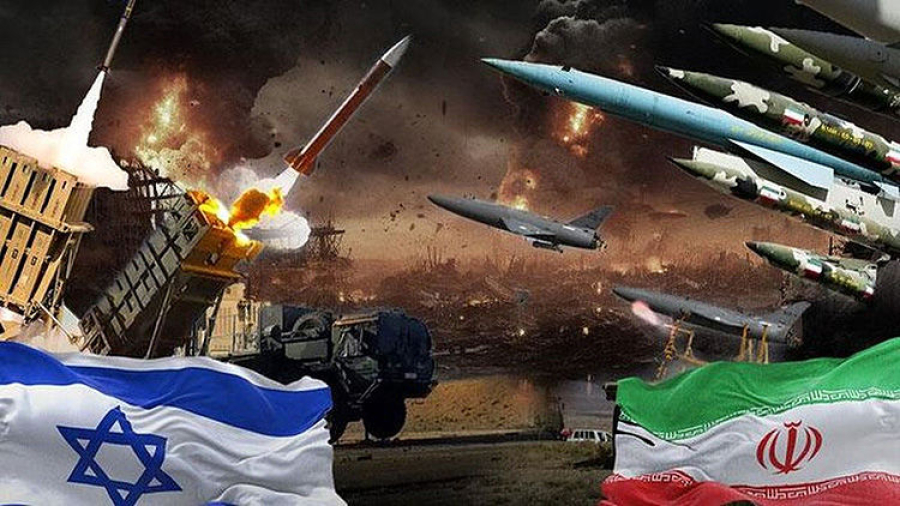
Why is the idea of “guaranteeing non-aggression” meaningless?
In the midst of the direct confrontation between the United States and the Zionist regime with Iran, some political activists have proposed the idea of “obtaining a guarantee of non-aggression.” This idea, more than being a considered strategy, is a reflection of an inaccurate understanding of the logic governing international politics. In the international system, commitments are not based on legal or moral will, but on the balance of power. Any agreement is valid only as long as the balance of power supports it; with a change in this balance, commitments also practically lose their function. Therefore, wars are essentially a means of redefining the balance of power, and it is the victorious side that ultimately determines not only the outcome of the battlefield, but also the rules of order that follow.
Washington and Tel Aviv entered this confrontation with the assumption that the space was fully prepared for the Iranian people to revolt against the government and change the political system. Why, their economic influencers had prepared the ground for public discontent and social revolt by increasing the price of currency and energy, and the disaster of January made the enemy greedy (we will discuss the role of economic influencers in the martyrdom of our beloved leader in detail at the appropriate time). Therefore, they implemented the policy of decapitation and assassination of political and military officials with the aim of creating a vacuum at the top of the government.
However, the exemplary insight of the people and their unprecedented presence in the streets in support of the regime did not allow the nuclei of chaos to become active, and the project was nipped in the bud. The courage and wisdom of the nation's experts in appointing the new Supreme Leader disappointed the enemy on another level.
In the current situation, the United States has neither defined achievable operational goals with clarity, nor does it have a reliable "image of victory," nor an exit strategy that can justify the costs of this conflict. This situation is a sign of disruption at the strategic level of the other side.
In contrast, Iran has managed to shift the logic of the confrontation from the level of direct military conflict to a broader and more complex level; a level in which the costs for the other side increase exponentially and the hardware superiority is not the only determining factor in this war. Iran’s superiority is not unidimensional, but rather the result of the synergy of several key components: social cohesion and the effective presence of the people as a strategic support, the rapid consolidation of the leadership structure and the continuation of the decision-making capacity, the continuation of targeted strikes on the enemy’s vital interests and infrastructure, and the use of energy and global trade bottlenecks as leverage. This shift in the level of play has significantly changed the equation of war.
In such a framework, raising issues such as a “ceasefire” or obtaining “guarantees” before establishing superiority not only lacks real support, but can also lead to a standstill at a point that has not yet led to a lasting change in the balance of power. The experience of the ceasefire after the 12-day war shows that in the absence of imposing decisive costs and a tangible change in the balance, any commitment by the other side will be tactical and temporary in nature and can be quickly violated. Perhaps if Iran had not accepted the ceasefire at the end of the 12-day war and had defined and offensive the battlefront in the same dimensions as it is now, many things would not have happened.
The strategic logic of the current situation requires that Iran’s goals be defined explicitly and at a level that targets the roots of the reproduction of the threat. In this framework, the end of the US military presence in the region can be proposed as a central goal; because the continuation of this presence provides a structural basis for the continuation of insecurity and intervention. The US withdrawal from the region is not simply a political demand, but a prerequisite for the formation of a new order in the Middle East; an order in which the rules of the game will be written by the new hegemon of the region (i.e. Iran) and its allies.
Accordingly, the main issue is not simply the end of an ongoing conflict, but rather the determination of the shape and rules of the order that follows. Any haste in accepting arrangements that lack support in the balance of power could lead to the reproduction of the threat cycle in the future. In contrast, consolidating superiority and defining strategic goals at a structural level will allow the formation of a more stable order based on the new realities of power.
Seyyed Yasser Jabraili