
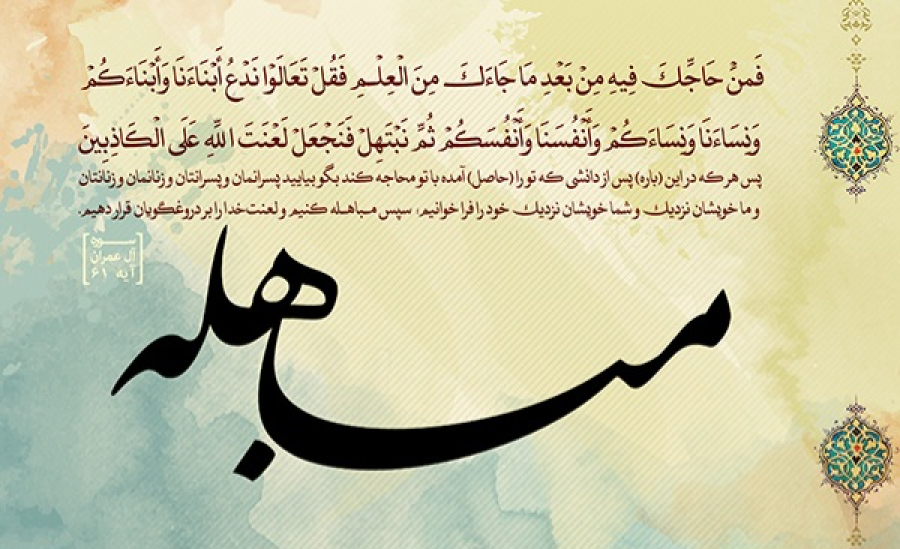
فَمَنْ حَاجَّكَ فِيهِ مِنْ بَعْدِ مَا جَاءَكَ مِنَ الْعِلْمِ فَقُلْ تَعَالَوْا نَدْعُ أَبْنَاءَنَا وَأَبْنَاءَكُمْ وَنِسَاءَنَا وَنِسَاءَكُمْ وَأَنْفُسَنَا وَأَنْفُسَكُمْ ثُمَّ نَبْتَهِلْ فَنَجْعَلْ لَعْنَتَ اللَّهِ عَلَى الْكَاذِبِينَ
Translation:
"Then whoever argues with you concerning him (Jesus) after the knowledge that has come to you, say: Come, let us call our sons and your sons, our women and your women, our selves and your selves, then let us pray and invoke the curse of Allah upon those who lie."
The Occasion of Revelation According to Sunni Sources
Many Sunni scholars of interpretation and hadith have narrated that this verse was revealed during the Prophet Muhammad’s (peace be upon him) discussion with the Christian delegation of Najran. When the Prophet invited them to Mubahala (a mutual invocation of God's curse upon the party that was false), he brought with him only these members of his family:
Imam Hasan (ع) → The meaning of "أَبْنَاءَنَا" (our sons)
Imam Husayn (ع) → The meaning of "أَبْنَاءَنَا" (our sons)
Lady Fatimah (س) → The meaning of "نِسَاءَنَا" (our women)
Imam Ali (ع) → The meaning of "أَنْفُسَنَا" (our selves)
Well-known Sunni References
Sahih Muslim, Book of the Virtues of the Companions, the hadith regarding the virtues of Ali ibn Abi Talib.
Jami’ al-Tirmidhi, Hadith 2999.
Tafsir al-Tabari, commentary on Verse 61 of Surah Al-Imran.
Tafsir Ibn Kathir, commentary on the same verse.
Tafsir Fakhr al-Razi (Mafatih al-Ghayb), commentary on the Verse of Mubahala.
Al-Durr al-Manthur by Jalal al-Din al-Suyuti.
In Sahih Muslim, it is narrated from Sa‘d ibn Abi Waqqas:
When the verse of Mubahala was revealed, the Prophet (peace be upon him) called Ali, Fatimah, Hasan, and Husayn and said:
«اللهم هؤلاء أهلي»
"O Allah, these are my family."
The Significance of the Verse
According to many Sunni scholars, this verse represents a great virtue for the Prophet’s Household (Ahl al-Bayt), because:
Imam Hasan (ع) and Imam Husayn (ع) are presented in the Qur’an as the Prophet’s "sons" in the context of this event.
Lady Fatimah (س) was the only woman whom the Prophet brought with him for Mubahala.
Imam Ali (ع) is included in the expression "أَنْفُسَنَا" ("our selves"), which is considered one of his greatest virtues, although Sunni scholars have different interpretations regarding the exact meaning of this expression.
Therefore, the Verse of Mubahala is regarded as one of the most important Qur’anic verses that, according to both Shi'a and many Sunni sources, highlights the special status and virtues of Imam Hasan (ع), Imam Husayn (ع), Lady Fatimah (س), and Imam Ali (ع).