
An article published by Reuters examines the growing political, military and economic risks facing US President Donald Trump a week after the US and Israeli war on Iran began. The article notes that the war has plunged West Asia into chaos and instability, raising questions about whether the United States will be able to turn its military actions into a clear geopolitical victory.
According to the report, even after the martyrdom of Supreme Leader Ayatollah Seyyed Ali Khamenei and strikes on Iranian forces, the crisis has quickly escalated into a wider regional confrontation. Reuters says this could lead to a protracted US military conflict, the consequences of which may be beyond the control of the Trump administration.
The article states that such a war would be a significant change in Trump's previous military approach. According to the report, Trump has usually preferred quick and limited operations. Reuters cited the January 3 blitzkrieg in Venezuela as well as a single strike on Iran’s nuclear facilities in the 12-day war.
The report quoted Laura Blumenfeld of the Johns Hopkins School of Advanced International Studies in Washington as saying that a war with Iran could turn into a complex and protracted military campaign. According to Blumenfeld, such a war could strain the global economy, undermine regional stability and even affect Trump’s Republican Party’s political standing in the US midterm elections.
The article also noted that when Trump came to power, he promised to keep the US away from what he called “foolish military interventions.” However, many experts cited in the report now see the current war as a self-inflicted and unjustified war; A war that they say was not launched in response to any imminent threat from Iran against the United States, although Trump and his aides have made such claims.
Analysts say Trump has struggled to explain the goals of his military operation in Iran. Reuters reports that the US administration has offered different explanations for the purpose of the war and has offered varying definitions of what would count as a “victory.”
White House spokeswoman Anna Kelly, however, has dismissed the criticism, saying Trump’s goals include destroying Iran’s ballistic missiles and their production capacity, destroying Iran’s navy, ending Iran’s ability to support its allies and preventing Iran from acquiring nuclear weapons.
Reuters also argues that if the war drags on for too long, the political fallout for Trump could increase. Increased U.S. troop casualties or the economic fallout from disruptions to Gulf oil flows could erode public support for the war and create political problems for the Republican Party.
The British media continued to examine domestic reactions in the United States and reported that members of the Trump supporters movement known as “MAGA” have so far mainly supported the military campaign against Iran, although some of his supporters who oppose military interventions have raised criticism. However, analysts have warned that any decline in this support could jeopardize Republican control of Congress in the midterm elections.
The report quoted “Brian Darling,” who is introduced as a Republican strategist, as saying that many Americans are unwilling to repeat the experience of the wars in Iraq and Afghanistan. According to him, the base of supporters of the MAGA movement is divided into two groups: those who relied on Trump’s promise to avoid new wars and those who trust his judgment in this war.
The article also examined the regional consequences of the war. According to a Reuters report, Iran has carried out retaliatory attacks against the Zionist regime and other neighbors; A move that, according to the report, was taken with the aim of increasing the costs of the war for the United States, the occupation regime and their allies.
The report also says that Lebanon’s Hezbollah has resumed fighting with the Zionist regime, a matter that shows that Iran still has the ability to activate its allied groups.
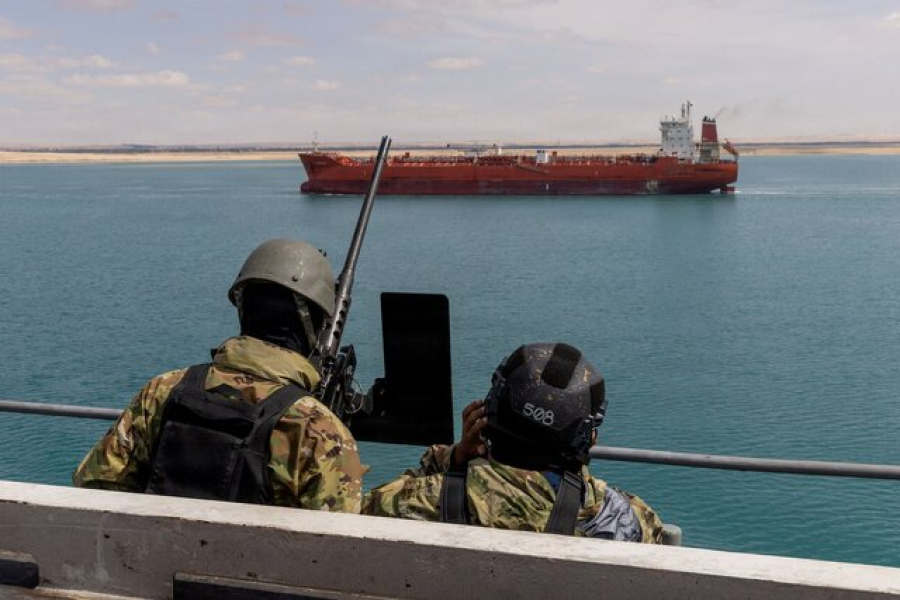
Reuters also examined the economic risks arising from the war. One of the immediate concerns raised in the article is the threat from Iran to the Strait of Hormuz, a narrow passage through which about a fifth of the world’s oil passes. Reuters writes that the traffic of oil tankers has been stopped and if this situation continues, it could have serious economic consequences.
The article quotes Josh Lipsky of the Atlantic Council think tank in Washington as saying that the economic consequences of this war seem to have not been fully foreseen by the US government. A former US military official was also quoted as saying that some members of Trump’s team did not consult enough with oil market experts before launching the attack on Iran.
The report also notes that Trump decided to proceed with the strikes despite warnings from some senior advisers that it would be difficult to contain the escalation. According to Reuters, some traditional US allies were also surprised by the decision.