
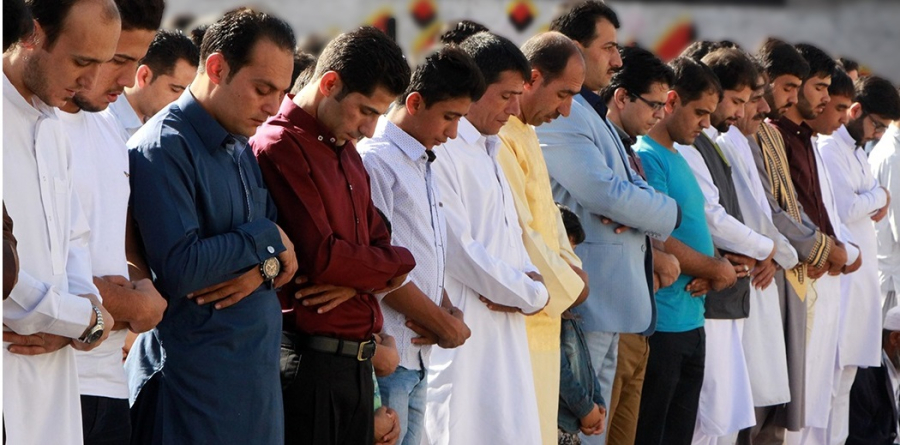
Iran is a country in which Twelver Shi‘ism is the dominant Islamic sect and also the official religion of the state, while at the same time it enjoys a significant diversity of Islamic schools of thought. Shi‘ism became firmly established as the official religion during the Safavid era, and today the majority of Iran’s population follows this sect. Alongside the Shi‘a majority, Sunni Muslims—whose presence in Iran dates back to the earliest centuries of Islam—form an important and historically rooted part of Iranian society.
Sunni Muslims in Iran mainly follow the Shafi‘i and Hanafi schools of jurisprudence. Shafi‘is are primarily found in Kurdish regions such as Kurdistan, Kermanshah, and parts of West Azerbaijan, while Hanafis predominantly live in Sistan and Baluchestan and the Turkmen Sahra. Although these schools differ in certain jurisprudential matters, they share complete agreement on the core principles of Islam, including belief in monotheism, prophethood, the Qur’an, and the direction of prayer (qibla).
Throughout Iran’s history, different Islamic sects have not only coexisted, but have also influenced one another in areas such as culture, language, scholarship, jurisprudence, and mysticism. Many prominent Iranian scholars, jurists, and commentators have emerged from various Islamic traditions. For this reason, the diversity of Islamic sects in Iran can be seen as an example of religious plurality within a shared Islamic identity.