ity.
The birth of Imam Ali ibn Abi Talib
-
font size
decrease font size
 increase font size
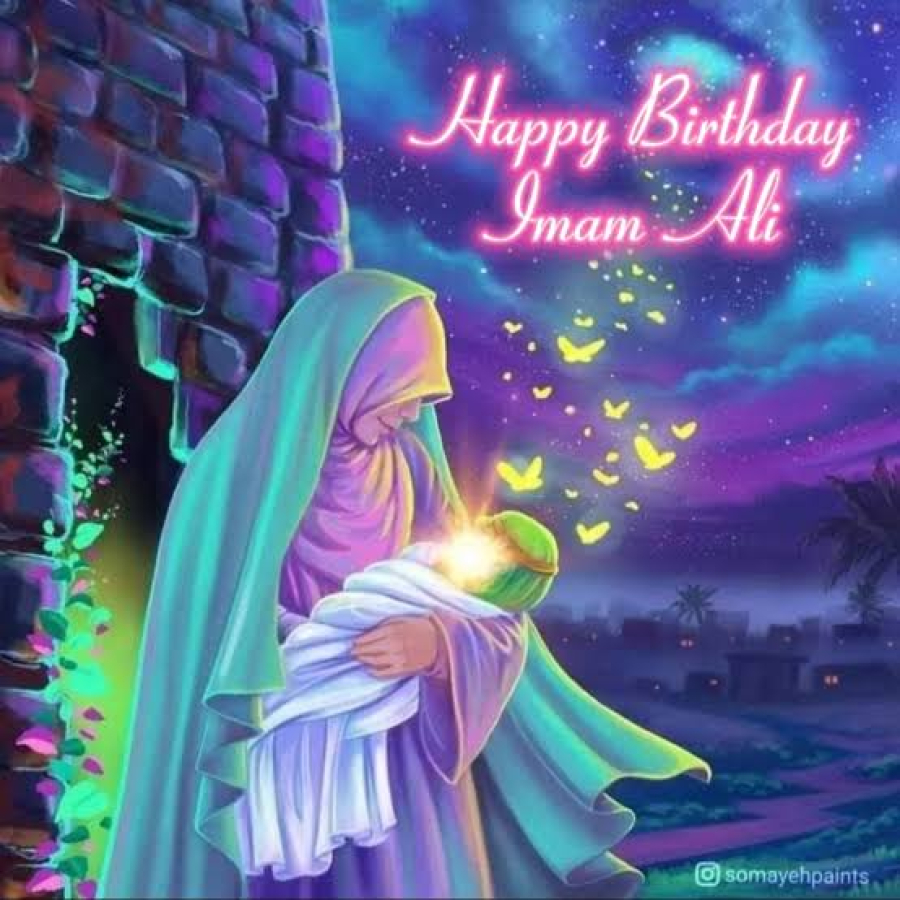
The birth of Imam Ali ibn Abi Talib (peace be upon him) is one of the most remarkable and unique events in the history of Islam and holds a special place in the beliefs of Muslims, especially Shiites.
Imam Ali (pbuh) was born on the 13th of Rajab, 30 years after the Year of the Elephant (approximately 23 years before the migration of the Prophet Muhammad ﷺ) inside the Kaaba in the city of Mecca. This feature makes his birth unparalleled in history, as according to historical sources, no one other than Imam Ali (pbuh) has ever been born inside the Kaaba. His mother was Fatimah bint Asad, a faithful and virtuous woman of Quraysh, and his father was Abu Talib, the uncle of the Prophet of Islam and one of his greatest supporters.
According to historical narrations, when Fatimah bint Asad went into labor, she came to the Kaaba and prayed to God for help. The wall of the Kaaba split open, allowing her to enter the House of God. After a few days, she emerged holding her newborn child. This event has been reported by many Shiite and Sunni historians and is considered a sign of the high status and divine position of Imam Ali (pbuh).
From childhood, Imam Ali (pbuh) was raised in the household of the Prophet Muhammad (pbuh), and he was the first man to believe in the Prophet. His birth in the House of God is seen as a symbol of his deep connection with monotheism, justice, and divine values—principles that were reflected throughout his life, leadership, and martyrdom.
For this reason, the 13th of Rajab is celebrated in Shiite culture as the birth anniversary of Imam Ali (pbuh) and is also observed as Father’s Day—a day to honor faith, courage, justice, and human
Published in
Islamic Events