
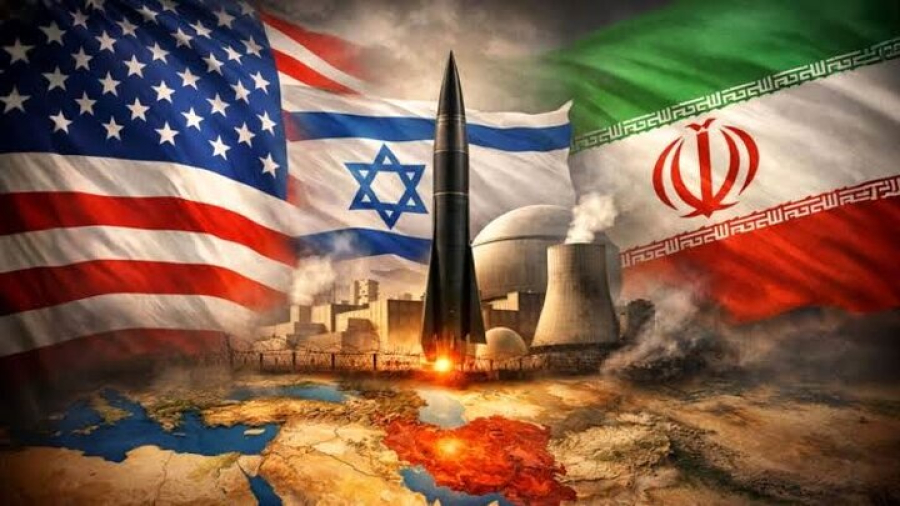
Al-Mayadeen emphasized in an article that Benjamin Netanyahu will not simply accept the results of the US-Iran talks and will try to thwart any possible agreement. The author believes that Netanyahu’s main goal is to achieve “absolute victory”; that is, the complete disarmament of Hamas, Islamic Jihad and Hezbollah and even change the Iranian political system, and for this reason he will not accept any agreement that falls short of these goals.
According to the author, Netanyahu will first try to dissuade Donald Trump from signing the memorandum of understanding that is said to be on the verge of being finalized between Washington and Tehran, and if he fails, he will try to sabotage its implementation process in the next stage. He also believes that further military pressure could weaken or even overthrow Iran, and for this reason he is trying to persuade Trump to enter a new war against Iran.
In contrast, Trump is now facing domestic and foreign pressures. Many in the United States believe that the war with Iran has served Netanyahu’s personal interests more than the interests of the United States. On the global level, the closure of the Strait of Hormuz has disrupted the global economy and supply chains, pushing Washington toward diplomatic solutions.
According to media reports, the draft agreement includes an extension of the ceasefire, the reopening of the Strait of Hormuz, the easing of sanctions, the release of some of Iran’s assets, and a postponement of the review of the details of the nuclear file. Netanyahu sees the agreement as beneficial to Iran because it allows Tehran to rebuild its financial resources and regional power without limiting its missile program and regional influence.
Finally, the author predicts that if Netanyahu fails to prevent the signing of the agreement, he will likely try to disrupt the implementation of the agreement by escalating tensions in Lebanon and even fueling a domestic crisis in the country.
The Rai al-Youm newspaper wrote in an article that, contrary to Donald Trump’s triumphant claims, the recent war against Iran has not only not had a clear strategic achievement for the United States, but has also confronted Washington with deeper problems. The author emphasizes that Iran continues to insist on its red lines, namely maintaining its uranium enrichment program and controlling the Strait of Hormuz, and the war has not changed this equation.
The report states that the US military entered the battle relying on highly advanced and expensive weapons; weapons that take time to produce and replace. In contrast, Iran has used asymmetric tactics, including drones, fast boats, sea mines and cheap missiles that are easier to mass produce. The author likens this situation to using “fleeing in a car wrecking yard”; that is, the United States is trapped with complex equipment against simple but numerous tools.
The article says that the Pentagon’s internal assessments differ significantly from Trump’s statements. Despite the US attacks, Iran’s dispersed and flexible military structure has not suffered significant damage and has even been able to rebuild itself. Some analysts also believe that the decision to enter the war was influenced more by political pressure and support for Israel than by military necessity.
It goes on to mention the concerns of the Arab countries of the Persian Gulf, who fear the spread of the war and the vulnerability of their oil and water desalination plants. The author concludes that this war has exposed the structural weakness of the US arms industry, especially in the supply of missiles, and Washington is now caught between accepting a stalemate or entering a new round of conflict whose outcome is uncertain.
In an article, Al Jazeera examined Iran-US relations in 2026 from the perspective of “tension management” and “mutual deterrence” and believes that the possibility of reaching a comprehensive and lasting agreement between the two countries is very limited. Drawing on the theory of “structural realism,” the author presents two main obstacles: first, the deep crisis of distrust that has developed over decades as a result of sanctions, revolution, political interference, and security tensions, and has turned any agreement into a tactical and temporary measure in the eyes of both sides. Second, the fundamental conflict of strategic interests; the United States seeks to maintain geopolitical superiority and contain Iranian influence, while Iran emphasizes strategic independence, deterrence, and the expansion of regional influence.
The article considers the three main axes of possible negotiations to include the nuclear file, economic sanctions, and Iranian regional influence. Tehran considers the nuclear program to be part of its national deterrence and wants to maintain a complete nuclear fuel cycle, while Washington emphasizes strict supervision by the International Atomic Energy Agency. In the economic sphere, Iran also demands the lifting of sanctions and reconnection to the global financial system, but domestic political constraints in the United States prevent the complete lifting of sanctions. On the regional front, the dispute over Iran’s role in Lebanon, Iraq, and Yemen remains one of the most complex obstacles to an agreement.
The author outlines three scenarios for the future: first, a “managed stalemate,” which is the most likely option and is based on informal understandings and tension control; second, a “fragile phased agreement” similar to the JCPOA but more limited; and third, a “strategic opening,” which seems unlikely to materialize in the short term.
Finally, the article emphasizes the role of China, Russia, and especially Israel. Israel sees any strengthening of Iran as an existential threat and is trying to prevent a rapprochement between Tehran and Washington through shadow warfare, intelligence operations, and diplomatic sabotage. The article concludes that relations between the two countries are moving not toward lasting peace, but toward a “fragile strategic ceasefire.”