
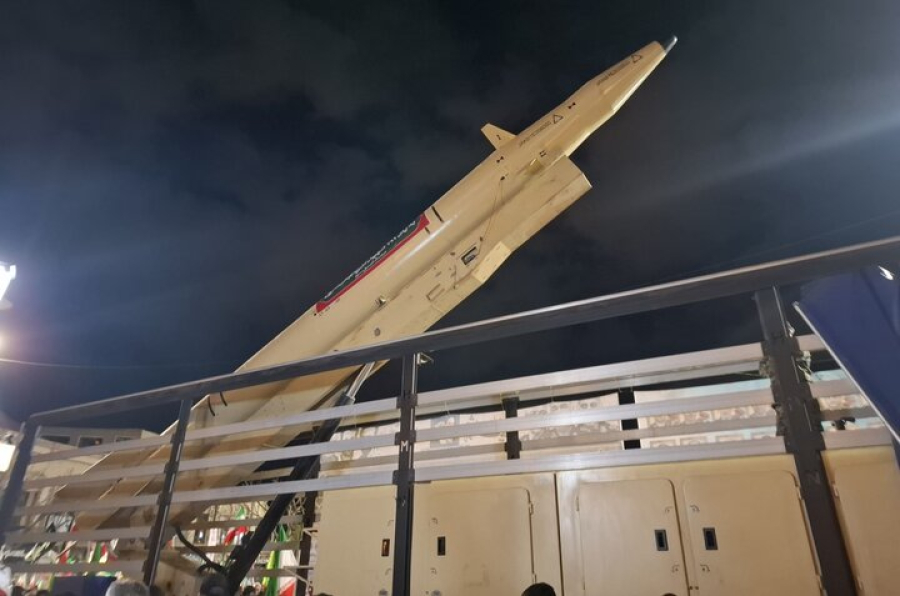
Mehr News Agency; Politics Desk – Hadi Rezaei: Amidst the persistent, threatening rhetoric from U.S. officials, defense and military authorities of the Islamic Republic of Iran are emphasizing the nation’s reliance on its missile capabilities, indigenous defense industry capacities, internal cohesion, and the strategic position of the Strait of Hormuz. This combination of stances indicates that Tehran’s response to pressure from Washington is not defined solely within the military sphere.
When military threats are transformed into tools for political pressure, the opposing side’s response is not necessarily limited to a mere display of weaponry and firepower. Recent remarks by Brigadier General Seyyed Majid Ebn-ol-Reza—acting head of the Ministry of Defense and Armed Forces Logistics—regarding the ineffectiveness of repetitive U.S. threats, coupled with Major General Amir Hatami’s emphasis on maintaining transit restrictions in the Strait of Hormuz should the rights of the Iranian nation be disregarded, illustrate the multifaceted nature of Tehran’s defense strategy. It is a strategy that integrates military capability, the sustained production of armaments, the cohesion of internal structures, and the country’s geopolitical position.
A Threat Intended to Force an Iranian Retreat
Addressing managers within the industrial organizations of the Ministry of Defense, Brigadier General Seyyed Majid Ebn-ol-Reza described the recurring threats from U.S. officials as a sign of their inability to re-evaluate past calculations. In his view, persisting with the very threats that previously failed to yield the outcomes Washington desired reflects a weakness in analyzing the realities on the ground, rather than a display of strength. Emphasizing that the Islamic Republic of Iran cannot be addressed through the language of threats, the Acting Minister of Defense stated that U.S. threats hold no operational value within Iran’s strategic calculus, remaining largely confined to the realm of political messages and statements.
These remarks should be viewed within the context of the multifaceted confrontation between Tehran and Washington—a standoff in which military threats serve as merely one instrument of pressure. For its part, Iran seeks to leverage its defensive capabilities and strategic assets to raise the costs for any party contemplating a new conflict.
Ultimately, a realistic assessment of deterrence cannot be based solely on the official statements of the parties involved. What truly matters is the relationship between articulated threats, operational capabilities, the experience of past conflicts, and the extent to which each side has succeeded in achieving its defined objectives.