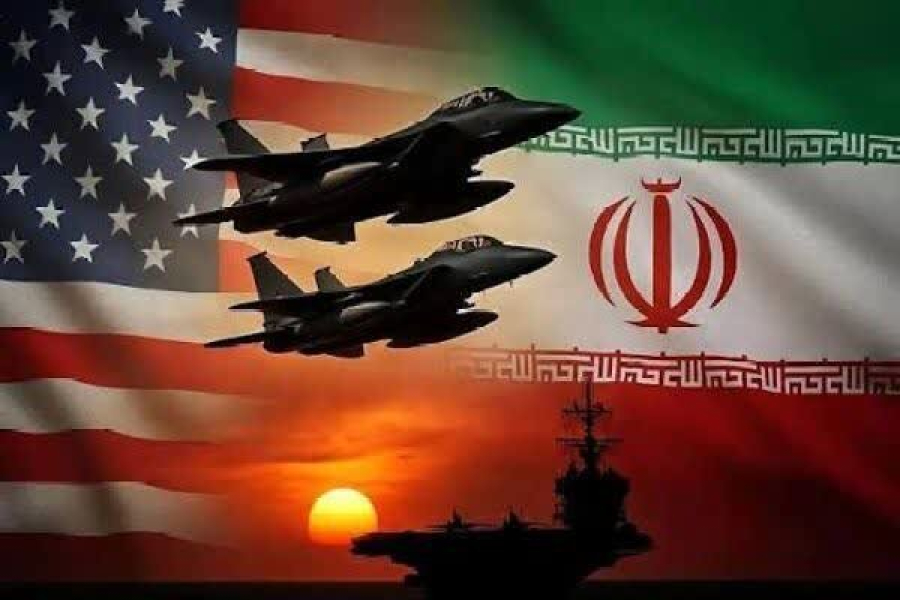
Mehr News Agency, International Desk: Since the onset of the military aggression by the United States and the Zionist regime against Iran, not only have the stated objectives of this operation failed to materialize, but—as acknowledged by Western officials and American media—the aggressors have faced a strategic stalemate as well as defeats on the battlefield and in the political arena. This conflict, which began with widespread attacks and the killing of civilians—including innocent schoolchildren—rapidly escalated in its humanitarian, security, and economic dimensions, eliciting diverse reactions across international media.
Global media outlets, each employing their own distinct perspectives, have sought to shape the narrative surrounding this war; examining these accounts can provide a clearer picture of the actual state of the conflict and its future outlook.
British and American Media
Citing several U.S. officials and informed sources, CNN has reported that American forces in the Middle East are prepared to launch a new—and potentially large-scale—military operation against Iran. Should an order be issued by Donald Trump, these forces could commence operations within 96 hours. According to the network's sources, the list of potential targets includes Iran’s energy infrastructure, military centers, and nuclear facilities—suggesting that the scope of any prospective strikes could extend well beyond limited attacks on military hardware.
The report notes that while Trump has yet to reach a final decision, some current and former U.S. officials believe there is a possibility that an order to strike could be issued before the end of the year—with the likelihood increasing following the midterm elections. At the same time, sources pointed out that, on previous occasions, Trump has backed away at the last minute from actions he had initially signaled an inclination to pursue. CNN also cites U.S. intelligence assessments indicating that Iran and Yemen are taking the possibility of new attacks by the U.S. and Israel seriously. According to the network's sources, should an attack on Iran commence, there is a strong likelihood of an immediate retaliatory response targeting U.S. forces and facilities—both within the region and potentially beyond. Meanwhile, the United States is reducing its diplomatic footprint and halting the deployment of non-essential military personnel to the region.
Another part of the report addresses Israel's role. According to U.S. and Israeli sources, Prime Minister Netanyahu has pushed for new strikes against Iran; however, Washington has urged Israel to wait until preparations for a joint operation are complete. The report suggests that Israel has likely deferred any such attacks until after the U.S. midterm elections. Israel's reliance on U.S. support for missile defense is also cited as a contributing factor to this delay.
An analysis by *The Conversation*—published eight days ahead of the November 3rd midterm elections—indicates that, based on Nate Silver’s forecasting model, Democrats have a 75% chance of securing control of the Senate and a 95% chance of taking the House of Representatives. Democrats currently lead in the generic ballot by 9.5 percentage points, while Donald Trump’s net approval rating stands at -23.3; 60.2% of respondents disapprove of his performance, compared to 36.9% who approve. The analysis suggests that if the disruption stemming from a conflict with Iran persists through the election—driving up gasoline prices and inflation—Republicans are likely to lose control of both chambers of Congress. The price of Brent crude has risen from $96.16 on September 29 to $116.72 as of last Friday, raising the prospect of further increases in gasoline prices before the elections. In a YouGov poll, 66% of respondents expressed greater sympathy for Ukraine, while 45% stated that Trump is more sympathetic toward Russia. Trump’s net approval rating stood at -32.6 regarding the economy and -46 regarding inflation. According to Nate Silver’s aggregate data, 55.2% oppose a war with Iran, while 36.3% support one. Due to Republican gerrymandering, Democrats require a margin of at least 4% to win the House of Representatives, and a double-digit margin for the Senate; nevertheless, Silver’s model currently shows them leading by 5% to 6% in the Senate. The retail price of gasoline in the United States is $4.29 per gallon.
Reuters reported that most Middle Eastern stock markets rebounded during early trading on Monday, as planned meetings between Iranian leaders and officials from Saudi Arabia, Turkey, and Pakistan fueled hopes for a de-escalation of tensions between the United States and Iran. According to Reuters, these talks are scheduled to take place in Tehran on Monday, marking the first high-level engagement among these four nations since Saudi Arabia became a focal point of pressure within the broader conflict involving Iran. Qatari mediators also traveled to Tehran on Sunday. Previous mediation efforts by Pakistan and Qatar had led to a temporary peace agreement in June, but that deal collapsed shortly thereafter.
Saudi Arabia’s main index surged 2.5%, putting it on track for its first gain in six sessions. Shares of Aramco rose 1.3%, while Al Rajhi Bank climbed nearly 3%. Qatar’s index rose 1.8%, with all constituent companies posting gains. The Dubai market remained flat, while Abu Dhabi’s index grew by 0.4%. Egypt’s benchmark index rose 0.6%, following a 3.6% decline in the previous session. In the energy sector, the energy ministers of Saudi Arabia and Singapore announced that, starting in the second half of 2027, Saudi Arabia will store crude oil in Singapore’s Jurong Rock Caverns to bolster regional supply security—a move prompted by the fact that conflict has disrupted the shipment of cargoes to Asia via the Strait of Hormuz. Meanwhile, oil prices retreated from a six-month high.
Arab Media
Al Jazeera writes that rising living costs, customs tariffs, and the repercussions of a war involving Iran could lead to a decline in Republican support during the midterm elections on November 3, 2026. Citing various polls, the article notes that Donald Trump’s popularity has waned, while the Democrats currently hold the lead in the race for the House of Representatives.
Contrary to Trump’s promises, the burden of customs tariffs falls largely on American consumers—a situation that has placed significant pressure on low-income families and the middle class. Furthermore, rising energy prices—triggered by a war involving Iran—have exacerbated inflation and increased household fuel costs.
The author predicts that the Democrats have a strong chance of securing a majority in the House of Representatives, though the outcome of the Senate race remains less certain. According to the author, voters prioritize the government’s performance regarding their livelihoods and economic security over political rhetoric. A shift in the balance of power within Congress could also lead to greater oversight of the administration’s tariff policies and decisions regarding war.
*Rai Al-Youm* writes that Tehran should not view Iraq as a guaranteed military asset in any potential future confrontation with the United States and Israel. While the two nations share deep political, religious, and social ties, this does not imply that Baghdad, the Popular Mobilization Forces (PMF), or other Iraqi armed groups would automatically participate in such a conflict.
The Iraqi government emphasizes national sovereignty, the state’s exclusive control over arms, and the prevention of Iraqi territory from becoming a theater for regional conflicts. Furthermore, the government’s plan to regulate weapons and restrict the activities of armed groups operating outside the official framework could alter the calculations of these groups, prompting them to prioritize their own political and social survival within Iraq.
The author argues that Iran should assess its own defensive, economic, and political capabilities—without assuming Iraq’s military participation—and work to prevent the escalation of conflict through dialogue with Baghdad. Iraq’s non-participation in military operations does not necessarily imply hostility toward Iran, nor does it signify a withdrawal of political support.
In an article, Al-Mayadeen reports that as the elections for the 26th Knesset approach, concerns are mounting in Israel regarding a potential recurrence of events similar to the storming of the U.S. Capitol by supporters of Donald Trump. Intensifying political polarization, hate speech directed at opponents, and a growing distrust of democratic institutions have created a fertile ground for social unrest.
Netanyahu, who views the election as a battle for his own political survival, may conflate the security of the state with his personal interests; should he face defeat, he might challenge the legitimacy of the election results. Conversely, his opponents fear that he will complete his judicial reforms and transform Israel into a religious state.
Polls indicate that a segment of Israeli Jewish society is unwilling to accept the outcome of a democratic election, even if they oppose the government’s policies. Furthermore, opposition to the voting rights of Arab citizens—coupled with efforts by right-wing activists to exert extensive oversight at polling stations—further heightens the risk of tension.
The author warns that if either side refuses to accept defeat, there is a risk of street protests, clashes, and even political violence—a scenario reminiscent of the 2021 attack on the U.S. Capitol. Russian and Chinese Media
In a report for the Russian newspaper *Nezavisimaya Gazeta*, Igor Subbotin writes that the Iraqi central government has promised Tehran that it will remove Iranian Kurdish armed groups—opposed to the Islamic Republic—from Iraqi territory. According to the newspaper, the United States and Israel have sought to utilize these groups to bring about a change in Iran’s political system.
While Iranian officials have confirmed an agreement with Baghdad, reports from Iraqi media suggest that, rather than fully expelling these groups, the Iraqi government might relocate them to areas further from the Iranian border—potentially even near the border with Saudi Arabia.
Anton Mardasov, an expert on Middle Eastern affairs, believes that fulfilling this commitment faces significant hurdles. The Kurdistan Regional Government (KRG) maintains effective control over the Kurdish-inhabited regions and may view the presence of these groups as a useful lever for exerting pressure on Tehran. Mardasov also raised the possibility that Iran could resume targeted strikes against these groups.
According to Mardasov, the appointment of Yasser al-Maliki as Iraq’s Minister of Interior could bolster Iranian influence in Baghdad; however, this does not necessarily grant the central government the capacity to assert control over the Kurdish regions. He added that while Baghdad might move these armed groups away from the Iranian border and confiscate some of their weaponry, their complete disarmament remains uncertain.
The Chinese network CGTN reported that high-level delegations from Saudi Arabia, Pakistan, and Turkey have arrived in Tehran to hold talks with Iranian officials aimed at preventing a resurgence of conflict involving Iran, the United States, and Israel. The delegations are led by Saudi Defense Minister Khalid bin Salman, Pakistani Army Chief Asim Munir, and the head of Turkey’s National Intelligence Organization (MİT), İbrahim Kalın. According to CGTN, the objective of these talks is to reach an agreement between Tehran and Washington and to reduce regional tensions. Ali Bagheri Kani, Deputy Secretary of Iran’s Supreme National Security Council, stated that the discussions would focus on security issues in West Asia and the establishment of an indigenous security framework involving regional nations. Esmaeil Baghaei, spokesperson for the Iranian Ministry of Foreign Affairs, also noted that immediate threats to regional security are among the key topics of the negotiations.
The Saudi Ministry of Foreign Affairs announced that the parties are exploring ways to de-escalate tensions, strengthen regional security, and maintain stability. According to two regional officials, the war in Yemen and attacks by Yemeni armed forces against Saudi Arabia are also on the agenda.
These talks are taking place against a backdrop of escalating threats from the United States and Israel, which have intensified concerns regarding the potential resumption of war.