Introduction
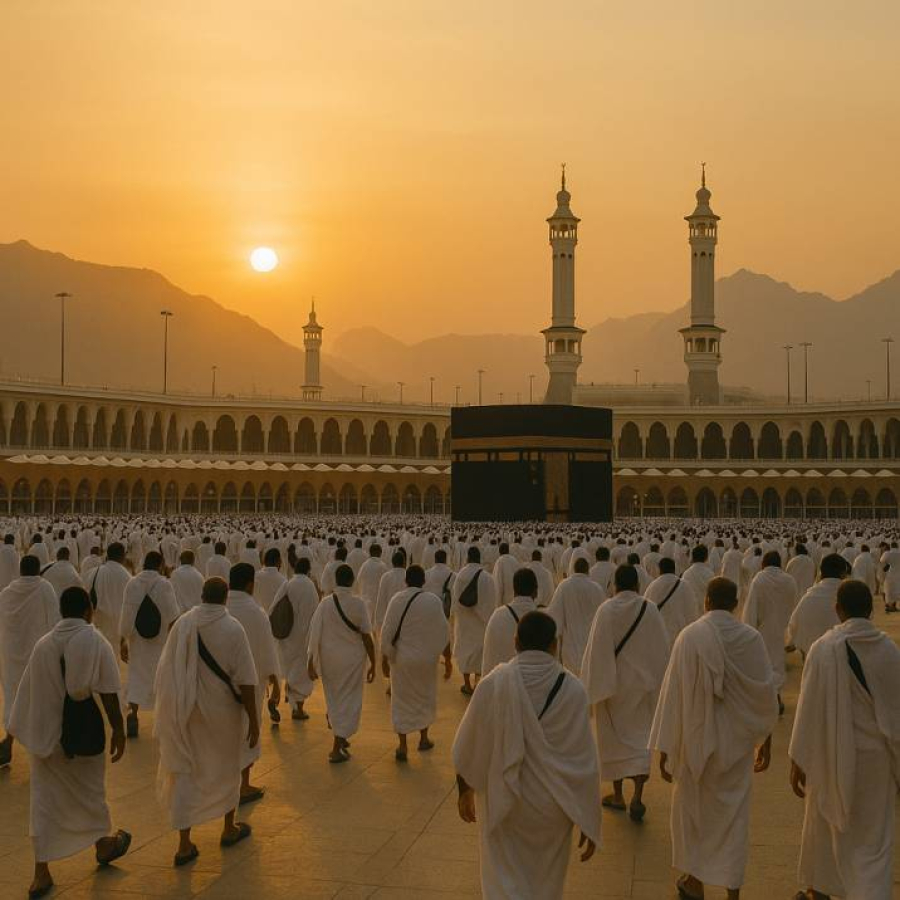
Hajj is one of the most important acts of worship in Islam and is considered one of the fundamental pillars of Islamic religious practice. In addition to its individual spiritual dimension, Hajj has significant social, moral, and spiritual effects, bringing Muslims from all over the world together in the Holy Land. Among the different types of Hajj, Hajj al-Tamattu‘ holds a special position. For Muslims who live far from Mecca, it is one of the principal forms of performing the pilgrimage. The obligation of Hajj al-Tamattu‘ is supported by the Qur’an, the Sunnah of the Prophet Muhammad (peace be upon him), and Islamic jurisprudence. Therefore, understanding its meaning, conditions, and philosophy is of great importance for every Muslim who possesses the ability to perform this religious duty.
The Concept of Hajj al-Tamattu‘
Hajj al-Tamattu‘ is a type of pilgrimage in which a person first performs the rituals of ‘Umrah al-Tamattu‘ and, after completing the ‘Umrah, exits the state of ihram. Later, at the prescribed time, the pilgrim enters the state of ihram again and performs the rituals of Hajj. This form of Hajj is particularly important for people who come from distant regions, and in Shi‘i Islamic jurisprudence it is recognized as the primary form of Hajj for such pilgrims.
The Basis for the Obligation of Hajj
The obligation of Hajj is clearly stated in the Holy Qur’an. Allah says in verse 97 of Surah Al ‘Imran: “And pilgrimage to the House is a duty owed to Allah by people who are able to find a way to it.” This verse demonstrates that Hajj becomes a religious obligation for a person who possesses the necessary ability, or istita‘ah. Such ability is not limited to financial means; it also includes physical health, security of the journey, and other necessary conditions for performing the pilgrimage.
Hajj al-Tamattu‘ in Shi‘i Jurisprudence
According to Shi‘i jurisprudence, Muslims who live at a considerable distance from Mecca are required to perform Hajj al-Tamattu‘ when they possess the necessary conditions of istita‘ah. This ruling is based on Qur’anic verses and narrations transmitted from the Prophet and the Imams of the Ahl al-Bayt. Hajj al-Tamattu‘ consists of two main parts: ‘Umrah al-Tamattu‘ and Hajj al-Tamattu‘. After completing the ‘Umrah, the pilgrim exits ihram, and during the period between ‘Umrah and Hajj, actions that are prohibited while in ihram become permissible again. At the appointed time, the pilgrim enters ihram once more and performs the rituals of Hajj.
The Philosophy and Importance of Hajj al-Tamattu‘
The obligation of Hajj is not merely an external religious duty; it has profound spiritual and social objectives. Hajj provides an opportunity for repentance, self-purification, strengthening faith, and turning one's attention toward God. It also brings Muslims together regardless of wealth, race, nationality, or social status and therefore represents an important symbol of Islamic unity. Hajj al-Tamattu‘, with its particular structure, provides an opportunity to practice devotion, patience, discipline, and freedom from excessive attachment to worldly concerns.
Conclusion
Hajj al-Tamattu‘ is one of the most important religious obligations in Islam and becomes obligatory for a person who possesses the necessary conditions of istita‘ah. The Qur’an explicitly establishes the obligation of Hajj, while Islamic jurisprudence explains its conditions and method of performance. In Shi‘i jurisprudence, Hajj al-Tamattu‘ is the prescribed form of Hajj for those who live far from Mecca. Performing this obligation not only represents obedience to God’s command but also contributes to spiritual development, self-purification, and the strengthening of unity among Muslims. Therefore, learning about the rulings and philosophy of Hajj al-Tamattu‘ is essential for anyone who is legally required to perform this sacred journey.