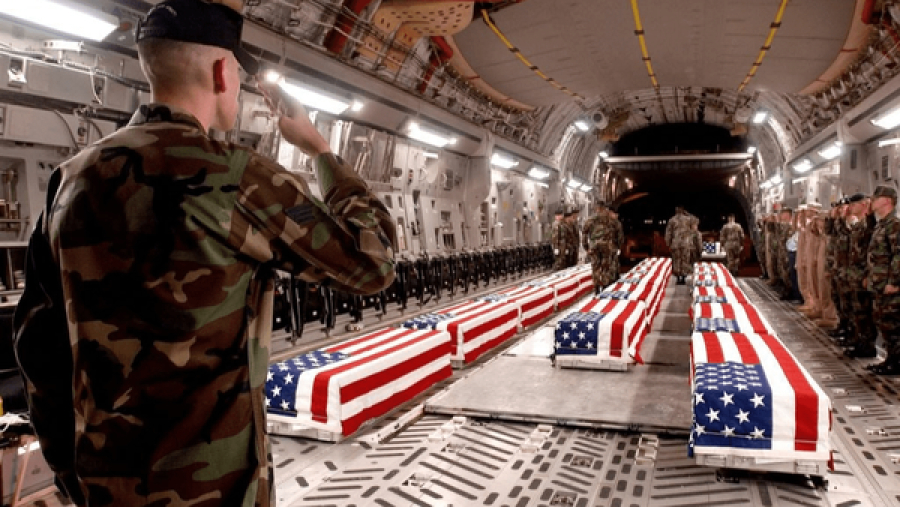
The U.S. Department of Defense has introduced a new classification system for reporting casualties related to the war with Iran.
The recent decision by the U.S. Department of Defense to create a new category for reporting military personnel killed or wounded in the war with Iran has drawn widespread criticism from members of Congress, the media, and American veterans.
Critics accuse President Donald Trump and the Pentagon of attempting to conceal the true human cost of the conflict by reducing transparency and obscuring casualty figures from public scrutiny.
According to these critics, the move is not only disrespectful to those who lost their lives but could also jeopardise access to medical care for wounded service members and benefits for the families of those killed.
Under a long-standing Pentagon practice, U.S. military casualties in combat zones are published through an online database known as the Defense Casualty Analysis System (DCAS).
However, the Department of Defense quietly removed the names of four U.S. service members who had been killed in recent Iranian attacks from the database last week.
Several American media outlets soon discovered the change and reported on it, describing the Pentagon’s action as an attempt by the U.S. government to downplay the casualties, damage, and overall costs of the war with Iran.
Following mounting criticism, Sean Parnell, the Pentagon’s chief spokesperson, claimed that the removal of the names was due to a “temporary data disruption.”
Shortly afterwards, however, media organisations including The Washington Post, The New York Times, and CNN reported that the Department of Defense had established a new category titled “Overseas Contingency Operations”, under which it began recording the names of military personnel killed or wounded after the collapse of the ceasefire agreement with Iran.
According to The Washington Post, on Sunday the Pentagon placed the names of four soldiers killed and 207 others wounded since 7 July into this new category.
The Pentagon argues that this statistical separation is justified by the ceasefire between Washington and Tehran. According to the Trump administration, Operation Epic Wrath, which began on 28 February, ended with the ceasefire declared on 7 April. As a result, casualties from the renewed hostilities that began on 7 July are being recorded separately.
One explanation for this move, critics argue, is an attempt by the Pentagon to minimise the apparent number of casualties from the conflict—a practice they say reflects a long-standing tradition within the department. They point to similar methods allegedly used during the Vietnam War to manipulate casualty statistics.
Another alleged motivation is the Trump administration’s effort to circumvent congressional limits on presidential war powers regarding military action against Iran.
Under the War Powers Resolution of 1973, the President is required to end military operations within 60 days unless Congress authorises their continuation.
Critics argue that by claiming the April ceasefire ended the original 60-day period, the Trump administration is attempting to portray the renewed fighting beginning on 7 July as a separate military operation, thereby avoiding the legal requirements imposed by Congress.
The Pentagon’s decision has also provoked strong reactions from organisations representing U.S. veterans.
Jess Finocan, an Air Force veteran and spokesperson for the Iraq and Afghanistan Veterans of America (IAVA), told The Guardian that a service member’s permanent military record is based on the operations in which they served. Altering those records, he warned, could have serious downstream consequences, potentially affecting military honours, access to healthcare, and survivor benefits.
Military and political figures have likewise condemned the changes as a serious sign of disrespect toward those killed and an obvious manipulation of official statistics.
Retired Admiral Michael A. Smith, founder of National Security Leaders for America, compared the move to the manipulation of casualty figures during the Vietnam War. He stated:
«“Claiming that they were not killed in war but merely during an overseas contingency operation is absurd and deeply disrespectful to their families. It is clear that the President is sensitive about casualty figures and does not want news of military deaths, so this is a way of making it appear that fewer people have been killed.”»
Republican Representative Thomas Massie of Kentucky also criticised the policy on X, writing:
«“Let me explain this ridiculous trick: The Pentagon is pretending there were two separate wars with Iran, divided by a brief ceasefire.”»
He added:
«“The reality is that Pete Hegseth has been violating the law by continuing military operations for more than 90 days without congressional authorisation, and he should be held accountable.”»
Democratic Senator Kirsten Gillibrand of New York also stated that the American people deserve to know the truth about the human cost of Trump’s war.