Tehran – IRNA: As parliamentary elections in the occupied territories draw closer, pressure on Benjamin Netanyahu is mounting over the security failures of October 7, his corruption cases, and doubts about the outcomes of recent wars. Against this backdrop, the possibility of renewed attacks on Iran has once again come to the fore. Such a scenario could serve as a means of reshaping the electoral climate. However, given doubts about the achievements of the previous war, the constraints imposed by international law, and Iran’s deterrence capabilities, it could turn into a costly gamble whose outcome would be controlled neither by Netanyahu nor necessarily by Trump.
According to IRNA’s foreign policy correspondent, linking domestic elections to war, particularly when there are serious indications of failure, is a tactic pioneered by US officials and emulated by Israeli regime officials. As a decisive election approaches and criticism—and even protests—against a president or prime minister seeking to retain power intensifies, the incumbent launches a military campaign against another country in the Middle East and West Asia. The aim is to create an opportunity, even if only temporarily, to postpone elections.
### The Prospect of Netanyahu Starting Another War and the Reasons Behind It
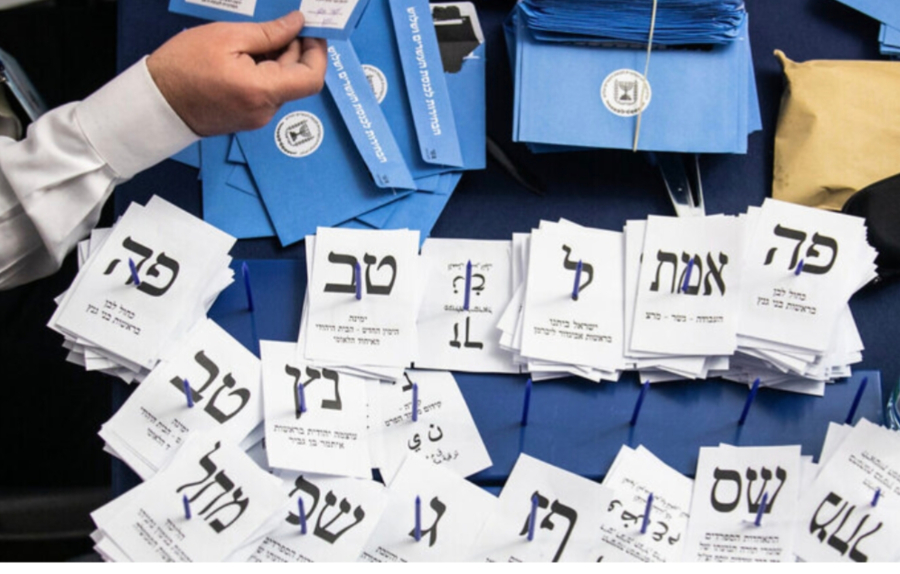
Claims, reports, and analyses published in Western media point to the possibility that this pattern could be repeated. As Israel’s parliamentary elections on October 27, 2026, approach, Israeli Prime Minister Benjamin Netanyahu is facing criticism within the occupied territories, potentially jeopardizing his and his party’s electoral prospects in the coming days.
In a report on Netanyahu’s political future, The Washington Post wrote that the October 27 election represents an opportunity for many families of the victims of the October 7, 2023, attack to hold those responsible for the security failures to account. Referring to Netanyahu’s refusal to accept personal responsibility and establish an independent commission of inquiry, the newspaper described the election as a decisive moment for his political future.
A scenario must therefore be devised and implemented to rescue him from the prospect of electoral defeat, even if he publicly denies such intentions. Renewed war with Iran appears to be one possible scenario.
Anadolu Agency, citing Avigdor Lieberman, Israel’s former defense minister and leader of the Yisrael Beiteinu party, reported his warning that Netanyahu might launch military action against Iran, Hezbollah, or Hamas before the October 27 election in an effort to remain in power. Lieberman accused Netanyahu of deliberately seeking to drag Israel into a military confrontation on the eve of the election for political purposes. He argued that Netanyahu’s policies toward ongoing crises are driven not by Israel’s security interests, but solely by calculations concerning his political survival and electoral victory.
In a report on security warnings ahead of Israel’s elections, Al Jazeera examined the dispute between Netanyahu and his opponents over the possibility of an attack or security threat occurring before the vote. According to the report, opposition leader Yair Lapid questioned Netanyahu’s warning about a possible “enemy attack against Israel before the election” and demanded clear information to substantiate the claim. The report indicates that security threats and their potential political exploitation have become part of the electoral dispute.
According to the US news website Axios, in a report published on October 13, Netanyahu and Trump discussed the possibility of launching a new military operation against Iran before the election. Although the published reports do not, by themselves, establish that an attack is imminent or that influencing the election is the decision-makers’ primary motivation, the coincidence of discussions about a new operation with the Israeli and US electoral contests provides serious grounds for examining the relationship between domestic politics, strategic calculations, and the risk of renewed war.
But why is Netanyahu so apprehensive about the election and its outcome?
The evidence suggests that the upcoming Israeli election represents far more than an ordinary political contest to retain the premiership. Netanyahu must answer for the consequences of the October 7 attack, which may be seen as evidence of a major security failure under his government. At the same time, speculation that he may have known about the attack in advance—and allegations that he remained silent or showed tolerance in the face of the threat—could continue to cast a shadow over his political career. His corruption cases and doubts about the lasting results of recent wars have also placed him in a difficult position.
No justification hastily assembled after the fact can render a decision legally legitimate if it was made according to an electoral timetable.
Reuters and The Washington Post have published various reports on the political pressure facing Netanyahu and the demands that he be held accountable. Axios also wrote in a report marking the anniversary of October 7 that “an electoral defeat could weaken his political standing and his ability to influence the course of his legal proceedings.”
Under these circumstances, escalating tensions abroad could offer an opportunity to shift public attention away from past failures and toward the management of a security crisis.
War has emerged as a possible means of political salvation for Netanyahu at a time when, according to analysts, Israel and the United States not only failed to achieve their objectives in the February war, but also face growing doubts about the soundness of the decisions made during that conflict.
In April 2026, the Carnegie Endowment for International Peace wrote that US and Israeli attacks had weakened some of Iran’s nuclear, missile, drone, and defense capabilities, but that the conversion of these operational gains into strategic success remained uncertain.
According to the institution’s assessment, Iran had preserved its governing structure as well as part of its missile and drone capabilities. In May, The Washington Post, citing a US intelligence assessment, reported that Iran retained substantial missile and drone stockpiles and could withstand a naval blockade for several months.
Under these circumstances, a crucial question arises: Could repeating the attacks produce a different outcome, or would it merely increase the human, military, and economic costs while keeping Netanyahu in power?
### International Law and the Illegality of Using War for Electoral Purposes
Linking domestic political developments and internal difficulties to war—a matter directly involving human lives—has been a practice employed by Washington over the past half-century during conflicts against Iraq, Afghanistan, and even Vietnam. However, using force in this way runs contrary to international law.
Article 51 of the United Nations Charter recognizes the inherent right of individual and collective self-defense if an armed attack occurs and emphasizes the reporting of relevant measures to the Security Council. By contrast, Article 2(4) of the Charter prohibits the threat or use of force against the territorial integrity or political independence of any state.
Self-defense is therefore an exception to the principle prohibiting the use of force, not a license to start a war for domestic political purposes.
International law expert Reza Nasri writes on this issue:
“Article 51 of the UN Charter permits the use of force in response to an armed attack. It is not a license to use war as a tool in an election campaign. No justification hastily assembled after the fact can render a decision legally legitimate if it was made according to an electoral timetable.”
Accordingly, if military operations are launched to influence an election or preserve political power, they cannot be rendered lawful simply by invoking security concerns or offering a preemptive justification.
Even when a valid basis for self-defense exists, the requirements of necessity and proportionality, as well as the rules of international humanitarian law, must be observed. Turning national security into an instrument of political survival not only risks violating international law but can also endanger civilians, undermine regional stability, and damage the credibility of international institutions.
### The Initiator of a War Does Not Control How It Ends
The US and Israeli military aggression against Iran was launched with objectives that included changing Iran’s political system and forcing the country to surrender. The conflict was initially expected to end within four weeks.
The war’s entry into its eighth month, the continued survival of Iran’s political system, and even the signing of an understanding by the US president with members of that same political system are clear indications that the manner and timing of a war’s conclusion do not necessarily remain in the hands of those who initiate it.
A government or group of governments may start a conflict, but once military operations begin, the adversary’s response, the geographical expansion of the war, the involvement of other actors, economic consequences, and international pressure can all push the crisis beyond the initiators’ initial calculations.
This point has been demonstrated particularly clearly in the case of Iran, given its political, ideological, geographical, and historical characteristics. The military aggression showed that damaging infrastructure and military capabilities does not necessarily bring resistance to an immediate end or enable the aggressor to achieve all its political objectives.
For this reason, any decision to resume the war must confront the reality that its consequences could extend far beyond the initial estimates of Tel Aviv or Washington.
Iran is better prepared than it was before the previous war. According to statements by military commanders, the country will respond to any new military aggression with the utmost resolve.
The operational experience gained during the previous conflict, the identification of strengths and weaknesses, the opportunity to reassess defensive strategies, the rebuilding of capabilities, and a better understanding of the adversary’s operational patterns have all increased Tehran’s preparedness for another round of hostilities.
For Netanyahu, returning to war could, in the short term, provide an opportunity to change the electoral agenda and place the emphasis on an external threat. However, such a move would be equally unpredictable.
Any decision to launch a new attack would not necessarily remain a limited military operation. It could escalate the crisis beyond electoral calculations and generate regional and international consequences that neither Netanyahu nor Trump would necessarily be able to control fully.