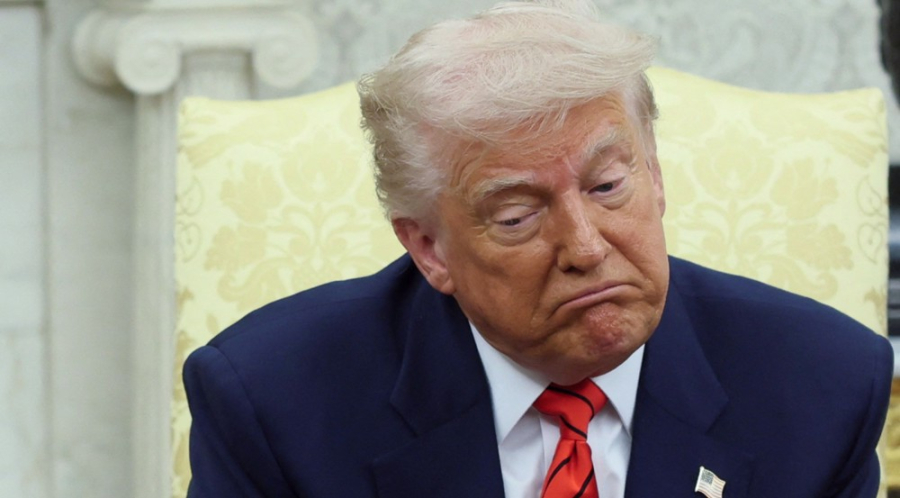
The United Arab Emirates (UAE) has blamed US President Donald Trump for the economic fallout from the US-Israeli war on Iran, warning that it will conduct financial transactions in yuan if the Federal Reserve does not establish a currency swap line with the Emirati central bank.
The United Arab Emirates has initiated negotiations with the US regarding a potential financial safety net to protect its economy if the ongoing aggression on Iran deepens the crisis in the Persian Gulf, The Wall Street Journal reported on Monday, citing US officials.
UAE Central Bank Governor Khaled Mohamed Balama raised the idea of establishing a currency-swap line during meetings in Washington last week with Treasury Secretary Scott Bessent as well as officials from the US Treasury and the Federal Reserve.
US officials said the Emirati side presented the proposal as a precautionary measure, noting that while the country has thus far avoided the most severe economic consequences of the US-Israeli aggression against Iran, it may still require financial support if conditions deteriorate.
The negotiations reflect growing concern in the UAE that the US-Israeli aggression against Iran could significantly harm its economy and undermine its status as a global financial hub.
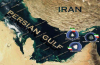
The US-Israeli aggression against Iran has already damaged Emirati oil and gas infrastructure and disrupted tanker traffic through the Strait of Hormuz, cutting off a crucial stream of dollar-denominated oil revenues.
US officials also said Emirati representatives indicated that Trump’s decision to attack Iran had drawn their country deeper into the conflict, creating economic risks whose impact may not yet be fully known.
UAE conducting financial transactions in Yuan could pose an challenge to the US dollar’s dominance in global trade, particularly because oil transactions are overwhelmingly conducted in dollars.
The criminal US-Israeli aggression against Iran began on February 28 with airstrikes that assassinated senior Iranian officials and commanders, including the Leader of the Islamic Revolution Ayatollah Seyyed Ali Khamenei.
Iranian armed forces responded by launching almost daily missile and drone operations targeting locations in the Israeli-occupied territories as well as US military bases and assets across the region.
Furthermore, Iran retaliated against the strikes by closing the Strait of Hormuz, which resulted in a significant increase in oil prices and its by-products.
On April 8, Iran’s Supreme National Security Council (SNSC) announced that there was an agreement to a Pakistan-brokered temporary ceasefire after the US accepted Iran’s 10-point proposal.
A high-ranking delegation from Iran led by Parliament Speaker Mohammad Baqer Qalibaf participated in the negotiations in Islamabad with the US delegation led by Vice President JD Vance.
Despite 21 hours of intensive discussions, the negotiations ended without an agreement, with Iran citing “excessive demands” from the US side.
Press TV’s website