US President Donald Trump has said he did not know in advance about Israel's terrorist attack on Iran’s South Pars gas field, but according to media reports, the attack was coordinated with the United States.
Three Israeli officials told the Reuters news agency on Thursday that the Israeli strike was coordinated with the United States but would not likely be repeated.
The officials, however, said that Israel was not surprised by Trump's comments, the agency reported.
The sources described the action as similar to one that played out after Israel bombed fuel depots in Iran several days ago.
On Wednesday night, Trump said in a social media post that Washington "knew nothing about this particular attack" by Israel, which he said, had "violently lashed out" at Iran "out of anger for what has taken place in the Middle East".
He said Israel would not attack the gas field again. After attacks on the world’s largest gas field in Iran, US war minister Pete Hegseth also said that in "that particular case those weren't our strikes."
On Thursday, Trump says he told Israeli prime minister Benjamin Netanyahu not to strike any more Iranian oil and gas fields.
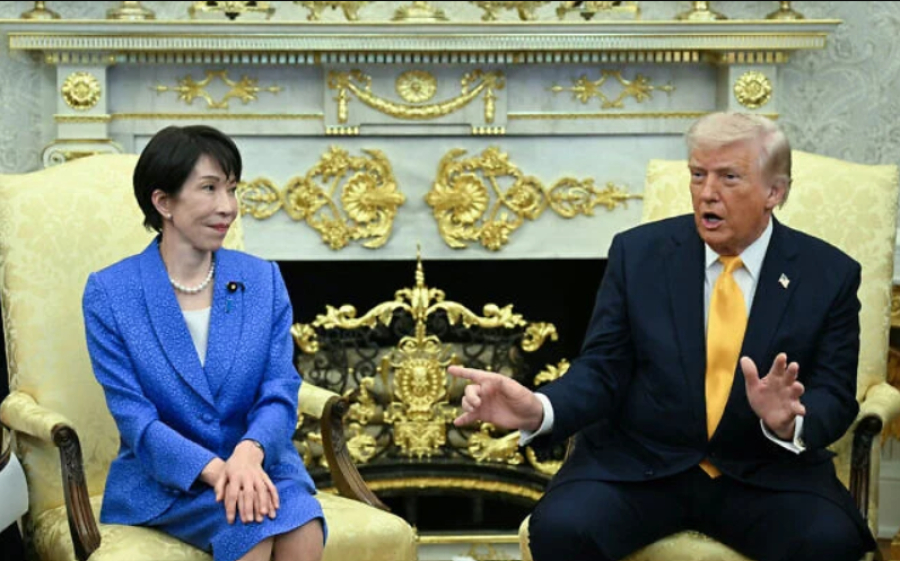
"I told him, ‘Don’t do that,’ and he won’t do that. We didn’t discuss [it]. We do independent, but get along great. It’s coordinated. But on occasion he’ll do something, and if I don’t like it.. and so we’re not doing that anymore,” Trump tells reporters in the Oval Office alongside Japans’s visiting prime minister Sanae Takaich.
According to the report, Persian Gulf Arab states had sought explanations from the Trump administration, with one country contacting US Central Command.
The command told that country that it was not informed in advance of the Israeli strike, the report said.
That country then contacted Trump's special envoy Steve Witkoff, who said that while the strike was not a joint US-Israeli aggression, Washington was informed about it ahead of time, it added.
Prior to Trump's statement, the Wall Street Journal had quoted unnamed US officials saying the president had supported the strike on South Pars as a message to Iran over its restriction of tanker traffic through the Strait of Hormuz - one of the world's busiest oil shipping lanes - but that he did not want to see further such strikes.
Qatar's foreign ministry spokesman said "the Israeli targeting of facilities linked to Iran's South Pars field, an extension of Qatar's North Field" was a "dangerous and irresponsible step". The UAE and Oman also condemned the attack.
The attack on Iran's South Pars gas field drew an Iranian retaliatory assault on US military bases and its energy companies across the region.
According to the Washington Post, the Pentagon is requesting an extra large spending budget from Congress, roughly an additional $200 billion, to fund and resupply US war machine as terrorism against Iran rounds Day 20.
The US and the Israeli regime have repeatedly sought to highlight their close coordination in their joint war of terrorism on Iran, but authorities on both sides have claimed that their objectives are not the same.
On Thursday, US Director of National Intelligence Tulsi Gabbard told a House intelligence committee hearing that while Israel has been focused on "disabling the Iranian leadership," the US has focused on destroying Iran's ballistic missile program and its navy.
Senior Iranian officials say they hold both the US and Israeli regime responsible for indiscriminate bombing of residential areas, schools and hospitals during their ongoing aggression against Iran.
The US and Israel carried out coordinated attacks while negotiations were still ongoing, amid reports that some regional countries endorsed the aggression.
Speaking separately to reporters Thursday, President Trump and his extremist war secretary Hegseth didn't dispute the report.
"We're asking for a lot of reasons, beyond even what we're talking about in Iran, when this is a very volatile world," Trump said. "As far as $200 billion, I think that number could move, obviously," said Hegseth.
Press TV’s website