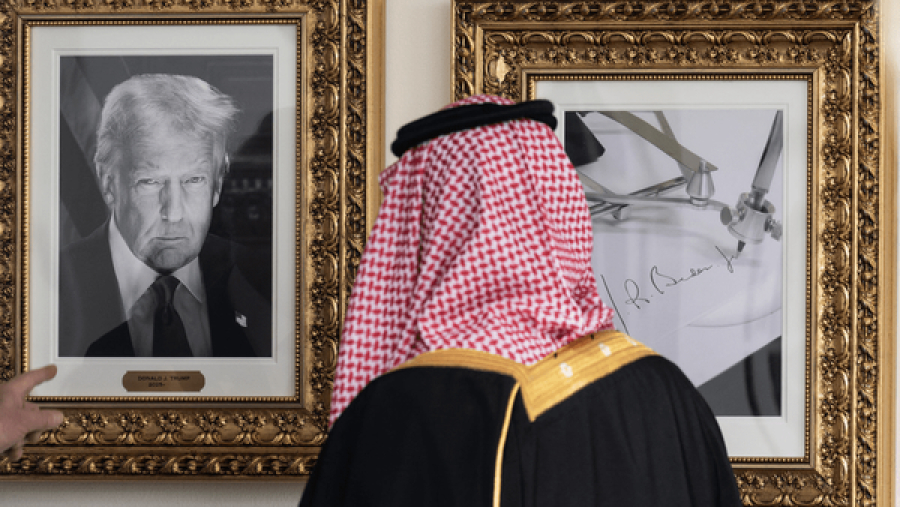
As conflicts continue in the Middle East, the Washington Post reported on Saturday that dissatisfaction with Trump among US allies in the Persian Gulf has reached an all-time high.
Dissatisfaction with Washington is growing in the Persian Gulf region, where US allies are increasingly concerned that US President Donald Trump is unable to manage diplomacy to secure peace with Iran, according to Arab and Western officials.
Trump has repeatedly threatened Iran in recent weeks, but has since backed down, claiming progress in talks, according to the Washington Post.
After months of conflict and continued missile and drone attacks by Iran and resistance groups, the governments of Saudi Arabia, the United Arab Emirates, Qatar, Kuwait and Bahrain are now united in their dissatisfaction with the Trump administration, according to three officials and a former US diplomat.
Some of these countries have begun to debate the usefulness of continuing to host US military installations on their soil.
“Trump started this war and we are paying for it,” said one Gulf official, adding that anger with the US is at its highest level since the US and Israeli aggression against Iran began in March last year.
The Gulf states still rely on Washington as a close security partner and a major arms supplier, with Qatar and Bahrain hosting major US bases. But the discontent has some countries considering new arrangements.
The developments are unlikely to lead to a significant realignment in the region in the short term, analysts say, but some countries are starting to consider their options.
A senior European official said a defence deal signed last week between Saudi Arabia, Turkey and Pakistan was “a signal to the US.”
The official, who is in regular contact with Gulf leaders, said the pact shows that the three powerful Sunni states are “trying to diversify their security and defense partnerships. For them, America is not enough.”
“There has been discontent from the beginning,” said Firas Mekdad, director of the Middle East and North Africa region at the Eurasia Institute. America’s Gulf allies, he said, feel “unnecessarily” embroiled in a war that Trump is now struggling to resolve.
Among regional countries, Trump’s policy toward Iran is often described as “erratic” and “unpredictable,” Mekdad said.
Anna Jacobs, a fellow at the Gulf Arab Institute in Washington, said there has been a “decline in trust” in the United States since the war began. He said that US allies believe that “their behavior in the region is not making them safer, but more insecure.”
However, a Western diplomat in the region said that these changes do not indicate a significant change in attitudes towards the US. Even before the war with Iran, US forces in the region were not welcomed with “enthusiasm,” he said. “It was more of a necessary evil,” he said. “Now, the necessity of it is being questioned.”
According to the Washington Post, the attitude of Gulf leaders towards the war has changed. Oman has been against the conflict from the beginning, but Saudi Arabia, the UAE and Bahrain have supported it at times.
“At the beginning of the war, they were, I don’t want to say supporters, but frankly, not completely against the war,” said a senior European official. The thinking in Abu Dhabi and Riyadh, he said, was that a quick and decisive victory would be beneficial.
The official explained that this attitude began to change on the eve of the first round of talks between Iran and the United States in April, when it became clear that not only would the Iranian regime not fall, but it would not open the Strait of Hormuz.
Badr al-Saif, an assistant professor of history at Kuwait University, said that in the months since those talks, Trump’s inconsistency has worried Gulf states.
“Even before this back-and-forth with Trump, there was no clear strategy,” al-Saif explained, referring to the memorandum of understanding between Iran and the United States.
Douglas Silliman, a former U.S. ambassador to Kuwait and Iraq, said he had seen discontent with Washington on a recent trip to the region, although he said there was also discontent with Tehran.
Silliman, now president of the Arab Gulf States Institute, described the feeling in the region as “a strange paradox”: “being angry with the United States for starting the war and at the same time being dependent on the United States” for equipment, munitions and intelligence.
The economic strain on the Gulf states will increase if the conflict continues, according to the Washington Post. Even in peacetime, the region is deserted in the summer, with tourism declining and residents staying indoors to escape the sweltering heat.
But in the fall, temperatures cool and activity resumes. This year, conferences, summits, festivals and Formula One races were scheduled from October to December, but all are on hold.
The 10th annual Saudi Arabia’s Future Investment Initiative, dubbed “Davos in the Desert,” in late October, two months from now, could be an early test of whether senior officials and executives are willing to visit the region, a Western diplomat said.