Allah says in the Qur’an:
﴿وَلَقَدْ خَلَقْنَا الْإِنسَانَ مِن سُلَالَةٍ مِّن طِينٍ
ثُمَّ جَعَلْنَاهُ نُطْفَةً فِي قَرَارٍ مَّكِينٍ
ثُمَّ خَلَقْنَا النُّطْفَةَ عَلَقَةً فَخَلَقْنَا الْعَلَقَةَ مُضْغَةً﴾
(Surah Al-Mu’minun, 23:12–14)
Translation:
“And indeed, We created man from an extract of clay.
Then We placed him as a drop of fluid in a secure place.
Then We made the drop into a clinging form, and We made the clinging form into a lump.”
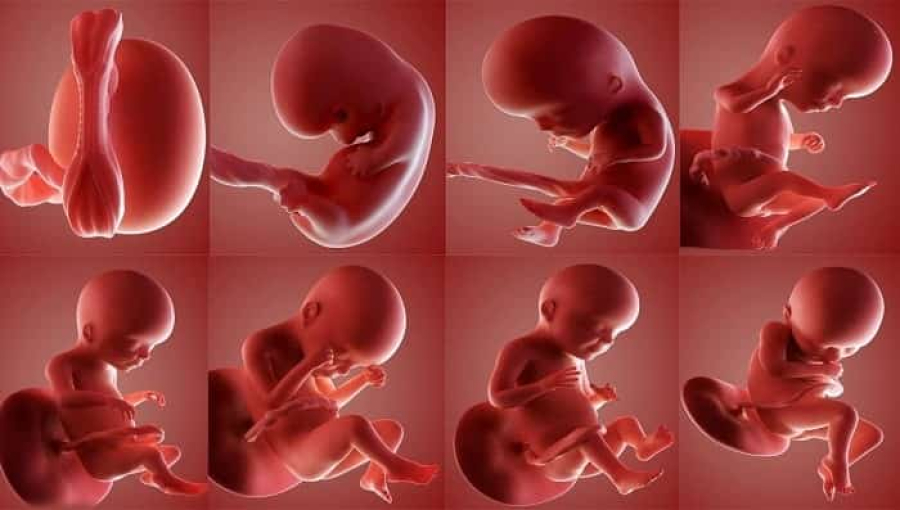
The Qur’an describes human creation as a gradual, step-by-step process.
The terms used are remarkably precise:
• Nutfah: a small drop of fluid
• ʿAlaqah: something that clings or hangs
• Mudghah: a chewed-like lump
Modern embryology confirms that human development occurs in distinct stages, and during early phases the embryo shows forms that strikingly resemble these descriptions.
The term mudghah, in particular, aligns with the appearance of early embryonic tissue marked by somite-like indentations.
For people living in the 7th century with no access to microscopes or internal anatomy, this layered description is deeply thought-provoking.