1. Political independence and breaking away from U.S. influence
The serious conflict began when:
Venezuela, starting in the era of Hugo Chávez, adopted a strongly anti-hegemonic policy toward the United States.
Strategic relations with Russia, China, Iran, and Cuba were expanded.
U.S. influence in Latin America was openly challenged.
From Washington’s perspective, Venezuela became: “A dangerous model for other countries in the region.”
2. Oil as the central issue
Venezuela:
Possesses the largest proven oil reserves in the world.
Nationalized its oil industry, pushing out major U.S. companies.
Sold oil outside frameworks preferred by the United States.
For the U.S., Venezuela represents:
A threat to energy security interests.
A challenge to liberal capitalist economic models.
An obstacle to controlling the regional energy market.
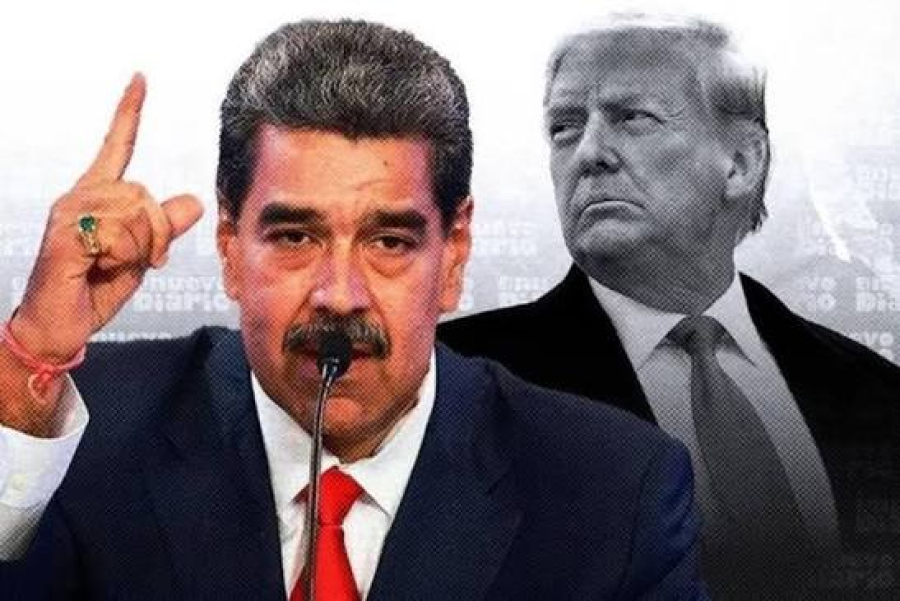
Accusations the United States has made against Nicolás Maduro
To justify pressure, the U.S. has consistently raised several accusations:
1. “Dictatorship and election fraud”
Claims that elections are not free or fair.
Labels Maduro’s government as illegitimate.
This is despite the fact that:
Maduro has been elected multiple times.
Some non-Western international observers have recognized aspects of these elections.
2. “Human rights violations”
Allegations of suppressing protests.
Claims of detaining political opponents.
These accusations are often used as a political tool, while U.S. allies with comparable or worse records are treated differently.
3. “Drug trafficking and corruption”
Accusations that Maduro and senior officials cooperate with drug cartels.
Publicly announced rewards for Maduro’s arrest.
This level of accusation is generally seen as a step toward: Legitimizing regime change rather than simply combating corruption.
What are the real U.S. strategies toward Venezuela? (Strategic analysis)
Without exaggeration or slogans, the commonly discussed scenarios are:
Scenario 1: Internal collapse
Severe economic sanctions.
Pressure on daily life to provoke social unrest.
Media campaigns to undermine the government’s legitimacy.
Objective:
Government collapse without direct military intervention.
Scenario 2: Installing a replacement government
Support for aligned opposition groups.
Recognition of an alternative “interim president” (such as Juan Guaidó in the past).
Seizure of Venezuelan assets abroad.
Objective:
Political control without military occupation.
Scenario 3: Sending a warning to Venezuela’s allies
Indirect pressure on countries such as Iran, Cuba, and Nicaragua.
Demonstrating the cost of defying U.S. influence.
Objective:
Maintaining regional hegemony.
What does the United States ultimately want?
In summary:
It does not want Venezuela to remain fully independent.
It does not want Venezuela to serve as an anti-U.S. resistance model.
It does not want Venezuelan oil resources to remain outside its influence.
It seeks instead:
A compliant government.
Open access for U.S. corporations.
The weakening or removal of resistance-aligned governments in Latin America.
Final summary
The U.S. problem is not simply Nicolás Maduro as an individual.
The core issue is an independent Venezuela.