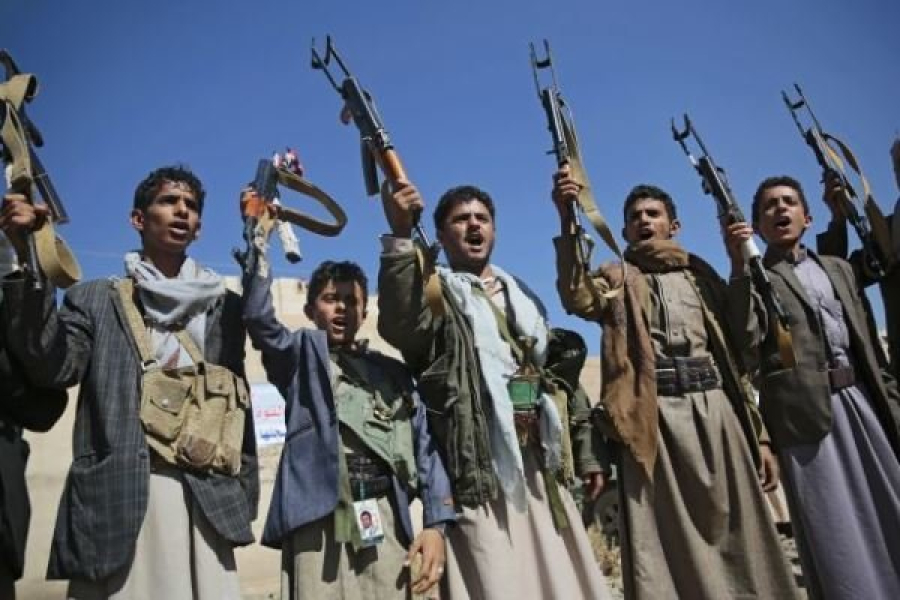
After 4 weeks of fighting and establishing 3 equations on Riyadh, Sanaa is now ready for the second phase of the battle, which, according to military sources, will inflict more painful blows on Saudi soil than the oil blockade.
After the statement issued yesterday evening by the spokesman for the Yemeni armed forces about the number of Saudi casualties and damages in the past month, political observers reported that Sanaa is ready to enter the “second phase” of escalating naval and air military tension against Saudi Arabia.
The Lebanese newspaper Al-Akhbar published a note today, Thursday, by writing Rashid Al-Haddad: “Within the framework of preparing to enter the second phase of escalating naval and air military tension against Saudi Arabia, the Sanaa forces emphasized that they have succeeded in establishing three military equations in the past weeks.”
The first equation was a “siege against a siege,” which was established from the south to the north of the Red Sea, crossing the Gulf of Aden and the Arabian Sea. The second equation was to target Saudi forces’ gathering points anywhere – from the west to the east of Yemen – and the third equation was “deterrence and direct response,” which was based on responding to violations of Yemeni airspace by targeting strategic facilities deep inside Saudi Arabia.
Brigadier General Yahya Saree continued, while explaining the achievements of the “first phase” of the military operation, and announced that since the 20th of last month, the Yemeni armed forces have targeted 8 Saudi oil ships (5 in the Red Sea and 3 in the Gulf of Aden and the Arabian Sea). He also emphasized that they have succeeded in preventing 48 Saudi oil ships from passing through the Red Sea and the Arabian Sea and forcing them to return.
According to Saree’s statement, the Sanaa forces have carried out a series of air deterrence operations using ballistic missiles and drones deep inside Saudi Arabia, which have accurately hit their targets and caused extensive damage to Aramco oil company facilities in the southern and eastern regions of the Kingdom.
The spokesman for the Yemeni armed forces continued that nine attacks were carried out in the regions of Yanbu, Najran, Jizan and Abha, and that the fuel transfer system from the eastern region to other regions was also targeted.
He added: “This operation was carried out in response to Saudi aggression on Sanaa International Airport and the port of Hodeidah, and in order to stabilize the equation of maintaining national sovereignty.”
Saree also warned Saudi Arabia against any further escalating action, stressing that Yemen’s response would be comprehensive.
Saree also referred to the sinking and burning of two military ships carrying weapons and Saudi forces off the coast of Al-Mokha (west of Taiz); a fate that also befell more than 10 warships engaged in piracy in the Red Sea.
Informed sources in Al-Mokha have emphasized that Yemeni forces have completely disabled the naval base on the coast of this city by targeting its combat readiness.
Regarding the targeting of Saudi forces’ supplies and gathering centers, Saree reported that 14 military operations were carried out in the areas of “Ruweek”, “Al-Ibari”, “Al-Wadi’ah”, “Marib” and “Al-Mukha”, which resulted in the killing and wounding of hundreds of enemy forces, including Saudi commanders and officers.
Al-Haddad further wrote that the announcement of the results of the 4-week military operation against Riyadh comes at a time when Sanaa has simultaneously raised the bar of its demands. Among Sanaa’s new demands, according to Saree, are “a complete end to Saudi aggression against the Yemeni people, the withdrawal of the occupying forces in any form and title, the cessation of financing and arming of Saudi-affiliated militias, and the transfer of the Yemeni people’s wealth to themselves.”
The main demands at the beginning of the naval blockade of Yemen were the implementation of agreements based on the UN “road map” (signed in late 2023), which included the lifting of the naval and air blockade, the payment of salaries to government employees according to the 2014 lists, the full determination of the fate of prisoners and detainees, and the reopening of blocked roads between Yemeni provinces.
According to observers in Sanaa, the new demands show that Ansarullah is preparing to increase the level of tension with Riyadh and has military options that were not used in the “first phase”.
In this context, military sources emphasized to Al-Akhbar that the rapid statement is a warning for the beginning of a new phase that will be more painful for Saudi Arabia.
These sources clarified that one of Sanaa’s military options is to transfer the battle to Saudi Arabia’s “southern borders” and carry out a large-scale ground military operation in the border strip.
Some leaders close to the Ansarallah movement have also called in recent days for a response to the Saudi reinforcement operations on the West Coast and the provinces of Marib and Al-Jawf by igniting the fronts on the southern borders of the Kingdom of Saudi Arabia.